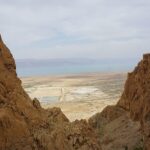

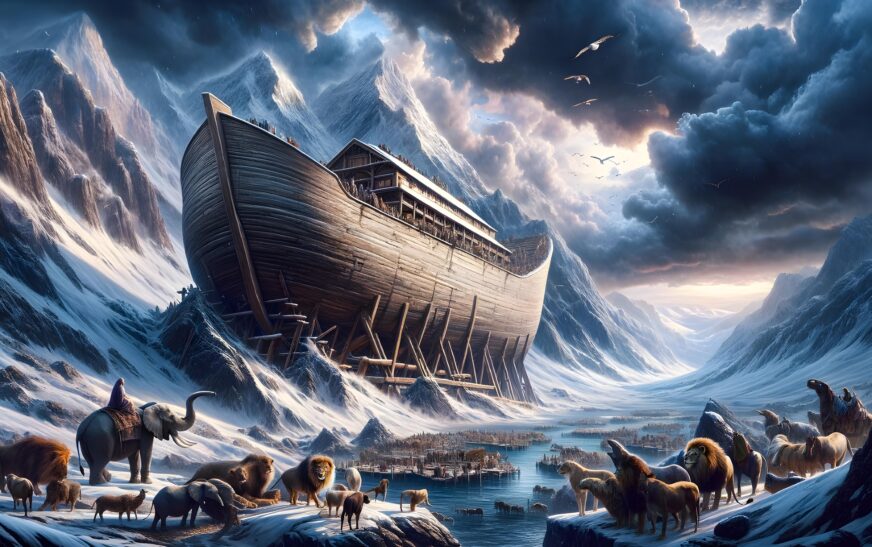
I remember sitting in my uncle’s living room years ago, watching a grainy documentary about a boat-shaped rock formation somewhere in Turkey. My uncle paused it, looked at me, and said, “That’s it. That’s Noah’s Ark.” I laughed at the time. Now, after years of casually following this topic, I don’t laugh anymore. I just get curious.
That’s the thing about Noah’s Ark. It sits in this strange space between myth, faith, and genuine scientific curiosity. People have spent entire careers chasing it. Some found wood. Some found rocks shaped like hulls. Nobody has found the actual ark, at least not with proof that satisfies everyone.
So let’s actually dig into this. Not with wild claims, and not with dismissive eye-rolling either. Just a real look at what’s out there, what’s missing, and why this story refuses to go away.
Why This Story Still Grips People After Thousands of Years
The flood story shows up in the Bible, in the Quran, and even in ancient Mesopotamian texts like the Epic of Gilgamesh. That alone makes people pause. Multiple ancient cultures, separated by geography and language, describe a massive flood and a boat built to survive it.
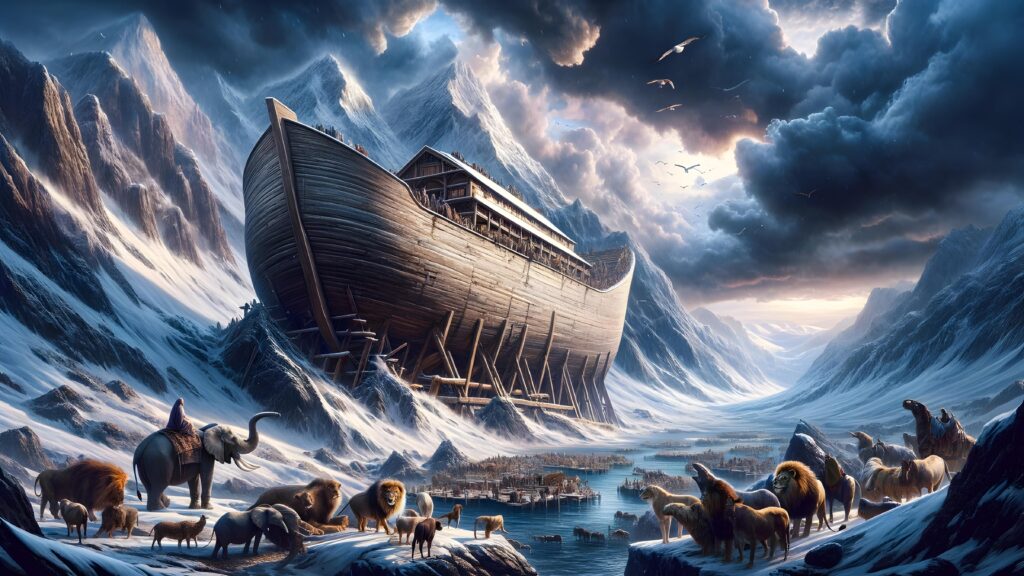
I first got interested in this because of that overlap. It’s not just one religious text making the claim. Similar flood stories pop up in cultures from Mesopotamia to parts of Asia and even among some Indigenous American groups.
That doesn’t prove the ark existed as described in Genesis. But it does raise a fair question. Did something big happen in ancient history that different civilizations remembered in their own ways?
Where People Have Actually Looked
Most of the serious search efforts point toward Mount Ararat in eastern Turkey. Genesis says the ark came to rest “on the mountains of Ararat,” and that phrase has fueled expeditions for centuries.
A naturalist named Friedrich Parrot led the first recorded climb up Ararat in 1829. Locals told him the ark still sat up there, untouched, because nobody dared approach it. Decades later, in 1876, another explorer named James Bryce found a piece of cut wood high above the tree line. He kept a chunk of it, believing it might be a genuine relic.
Since then, a steady stream of claims has kept the story alive. Researchers later exposed some of these as exaggerated stories or outright fabrications, like a widely circulated tale from the 1940s about a Russian pilot spotting the ark from the air. Investigators eventually traced parts of that story back to a writer who admitted he invented most of the details.
The Durupinar Formation: The Site Everyone Keeps Talking About
If you’ve searched anything about Noah’s Ark recently, you’ve probably come across the Durupinar formation. It’s a boat-shaped rock structure near Mount Ararat, and someone first documented it in 1959.
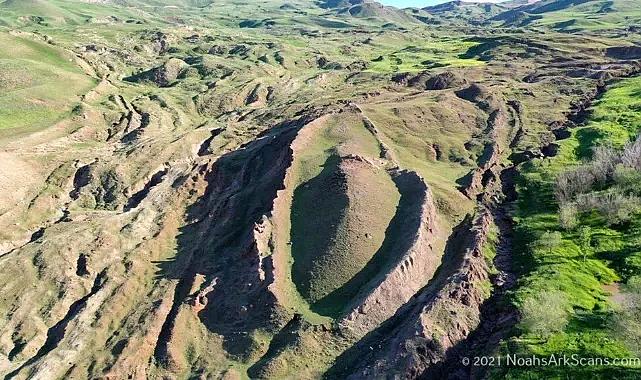
I got curious about this site specifically because it keeps resurfacing in the news, even now. A researcher named Andrew Jones, who runs a group called Noah’s Ark Scans, has spent years studying it using ground-penetrating radar and infrared imaging.
His team’s recent work genuinely intrigues me, whatever you end up believing about it. In 2024, his team collected 88 soil samples from inside and outside the formation. The soil inside showed three times more organic matter and 38 percent higher potassium levels compared to soil just outside the boundary. Jones argues this pattern fits what you’d expect if a large wooden structure decayed there over thousands of years.
His team also reported corridors running through the formation, converging into a central open space he calls an atrium. In interviews, Jones has described this layout as consistent with a multi-deck structure, similar to how the ark appears in the biblical account.
It sounds compelling on the surface. But here’s where it gets complicated.
The Other Side of the Argument
Not everyone buys it, and honestly, some of the pushback comes from unexpected places, including researchers within religious science circles who take the biblical flood account seriously.
Geologist Andrew Snelling, who has studied the Durupinar site for decades, points out both scientific and biblical problems with identifying it as the ark. According to Genesis, the ark landed on the mountains of Ararat around day 150 of the flood, and mountain peaks didn’t appear again for another 74 days after that.
The Durupinar formation sits in a valley roughly 1,000 meters deep on the southern slope of Ararat, a relatively young volcano that last erupted in 1840. Snelling argues that both the location and the surrounding geology make it a poor match for the biblical description.
Then there’s the broader scientific community. Most researchers classify the search for Noah’s Ark as pseudoarchaeology. Ground-penetrating radar images require a lot of interpretation, and shapes that look like corridors or chambers to one researcher can look like ordinary rock fractures to another.
Even the Institute for Creation Research, a young Earth creationist organization that firmly believes in the biblical flood, publicly admitted in 2020 that despite decades of expeditions, nobody has found the ark and probably never will.
What I’ve Learned From Following This for Years
I made an assumption early on that I now realize was wrong. I figured that if the ark existed, someone would eventually produce undeniable, universally accepted proof, and the debate would just end.

That’s not how this works. Every new scan, every soil sample, every piece of wood someone finds on a mountainside adds another layer to the argument instead of settling it. Believers see confirmation. Skeptics see coincidence or wishful interpretation. Nobody walks away convinced by the other side’s evidence alone.
That taught me something useful, honestly. Some historical mysteries aren’t puzzles waiting for a final piece. They’re ongoing conversations that shift a little with each new discovery, without ever fully closing.
How to Actually Follow This Topic Without Getting Misled
If you want to dig into this yourself, a few practical steps helped me sort credible information from clickbait.
Step 1: Check Who’s Making the Claim
Groups like Noah’s Ark Scans openly admit their religious motivation, which isn’t a bad thing, but it does mean their interpretation of ambiguous data leans a certain direction. Cross-check their claims against geologists or archaeologists who don’t have a stake in proving the biblical account.
Step 2: Look at Peer Review Status
Documentaries and news segments often share scan results that haven’t gone through formal peer review yet. That doesn’t automatically make the results false, but it does mean outside experts haven’t independently verified the data.
Step 3: Watch for Old Stories Being Recycled
Several viral Noah’s Ark stories from the past few years simply recycle claims from months or even years earlier, repackaged as breaking news. Before sharing something, run a quick search to see when the original claim first surfaced.
Step 4: Follow Multiple Sources, Not Just One
I now follow updates from both faith-based research groups and mainstream science outlets. Reading both sides side by side gives a much clearer picture than sticking to content that only confirms what you already believe.
Step 5: Visit Museums or Documentaries With a Critical Eye
The Ark Encounter in Kentucky, for example, houses a massive full-scale ark replica that a creationist organization built. It’s an interesting experience and worth visiting if you’re curious, but it represents biblical measurements, not a discovered artifact.
Real Examples Worth Knowing About
The Durupinar formation isn’t the only claimed ark site, even though it gets the most attention.
In the late 1980s, a researcher named Ron Wyatt promoted the same formation, along with claims of finding “rivets” and “petrified wood” nearby. Independent geologists later analyzed the supposed metal objects and identified them as naturally occurring mineral deposits, not manufactured rivets.
There’s also a long-running claim involving a group called Noah’s Ark Ministries International, which announced in 2010 that they’d found wooden structures at high altitude on Ararat. Skeptics quickly pointed out inconsistencies in the story, and the claim never gained traction among mainstream researchers.
These examples matter because they show a pattern. Excitement tends to spread faster than verification, especially with a topic this emotionally significant to millions of people.
Common Mistakes People Make When Researching This Topic
Trusting a Single Documentary as Complete Proof
Groups with a specific narrative goal often produce these documentaries. Watching one and immediately accepting it as settled fact skips the step of checking outside criticism.
Confusing “Consistent With” and “Proof Of”
Soil chemistry or rock shapes being “consistent with” a wooden structure doesn’t automatically mean a wooden structure caused it. Plenty of natural processes can produce similar chemical signatures.
Ignoring the Difference Between Faith and Physical Evidence
Believing in the biblical flood account as a matter of faith is completely separate from claiming a specific rock formation proves it physically. Mixing the two often leads to disappointment when new evidence complicates the picture.
Sharing Sensational Headlines Without Reading the Full Article
A lot of headlines use words like “proof” or “confirmed” when the actual article says something far more cautious, like “adds weight to the theory.” Reading past the headline stops you from spreading exaggerated claims.
Final Thoughts
After years of casually following this story, I’ve landed somewhere in the middle, and honestly, that feels like the most honest place to be. The Durupinar formation genuinely interests me. The soil data deserves attention. The geological objections deserve equal weight.
Nobody has produced a piece of ancient timber with a verified radiocarbon date matching the biblical flood timeline, sitting inside a structure everyone agrees humans built. Until that happens, this remains one of history’s most persistent open questions rather than a solved case.
My uncle still believes that rock formation is the ark. I’m not fully convinced, but I’m not dismissing it either. Maybe that’s the most realistic way to sit with a mystery this old. Stay curious, stay skeptical, and let the evidence keep speaking for itself.