
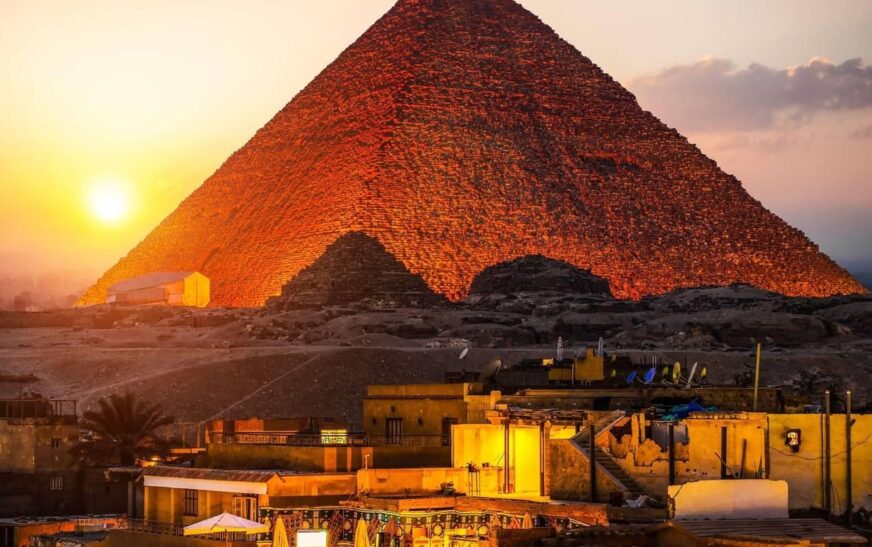
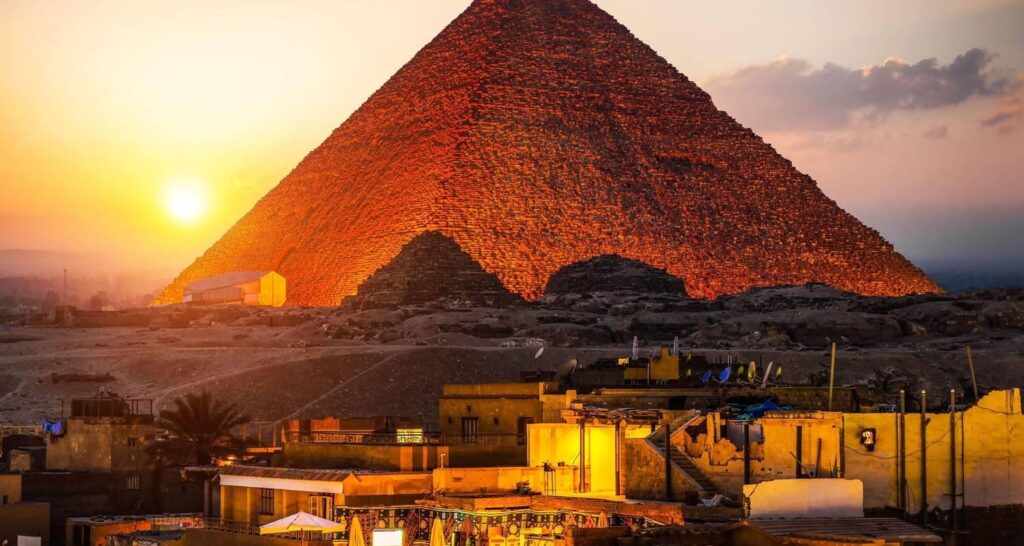
Standing at the base of the Great Pyramid for the first time, I did something embarrassing. I reached out and touched one of the enormous limestone blocks and just stood there with my mouth open like a complete tourist. The stone felt warm from the desert sun. It also felt impossibly old in a way that no photograph ever captures properly.
A guy nearby laughed and said he’d done the exact same thing on his first visit. He was an archaeologist on his third trip to Giza. Even he admitted the pyramid still made him feel like a confused kid standing next to something he couldn’t fully explain.
That reaction tells you something important. The Great Pyramid has been studied, measured, argued over, and written about for thousands of years. Yet it continues producing surprises. Some of the most interesting parts of its story never make it into school textbooks or popular documentaries. This article goes into those parts specifically.
What Most People Think They Know About the Pyramid
Most people carry a rough mental image of the Great Pyramid’s story. Ancient Egyptians built it. Thousands of slaves dragged massive stones across the desert. Pharaoh Khufu wanted an enormous tomb. Job done, mystery solved.
Almost every part of that picture turns out to be either wrong or dramatically oversimplified.
The slave theory has been effectively dismantled by archaeological evidence discovered in the 1990s. Workers’ villages found near the Giza plateau showed bakeries, breweries, medical facilities, and even cemeteries with healed bone fractures. That level of care isn’t consistent with slave labor. It points toward organized, paid, and reasonably well treated workers instead.
Egyptologist Zahi Hawass and his team uncovered these worker settlements in detail. The findings shifted the mainstream understanding considerably. Yet the slave narrative still circulates widely because it became embedded in popular culture long before the evidence changed.
The Scale Problem Nobody Talks About Enough
Reading that the Great Pyramid contains around 2.3 million stone blocks sounds like a large number. It doesn’t fully land until you try to visualize the logistics involved.
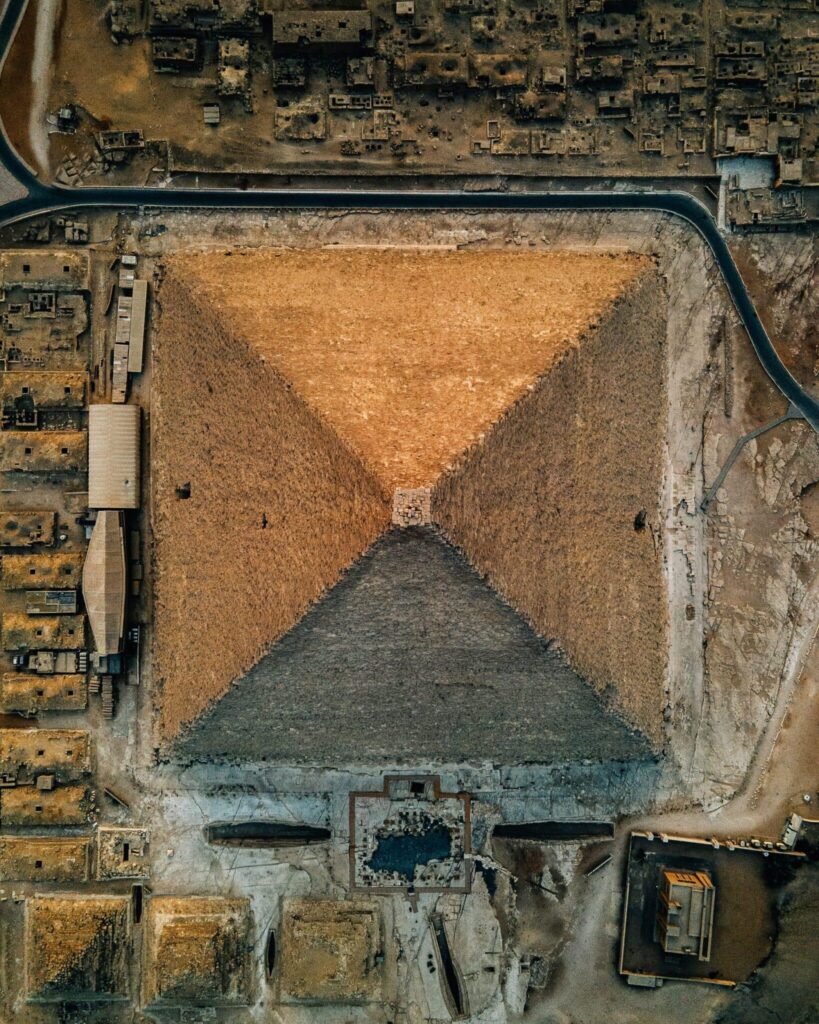
Each block weighs an average of 2.5 metric tons. Some blocks in the interior chambers weigh up to 80 tons. The pyramid rises to about 138 meters today, though it originally stood closer to 146 meters before losing its outer casing stones over centuries.
Here’s the part that genuinely unsettles engineers who study it. The base of the pyramid covers roughly 53,000 square meters. The four corners are level with each other to within just 2.1 centimeters. That precision wasn’t accidental. Achieving it with modern surveying equipment would be considered impressive. Achieving it around 2560 BCE is something else entirely.
Ancient Egyptians used tools including plumb bobs, set squares, and water filled trenches to establish level baselines. The results speak for themselves. Their margin of error across a structure the size of several city blocks was less than the thickness of two stacked pennies.
The Workers Who Actually Built It
Graffiti found inside the pyramid changed our understanding of the workforce dramatically. Egyptian workers left crew names painted on stone blocks in areas not meant for public viewing. Names like “Friends of Khufu” and “Drunkards of Menkaure” appeared on interior stones.
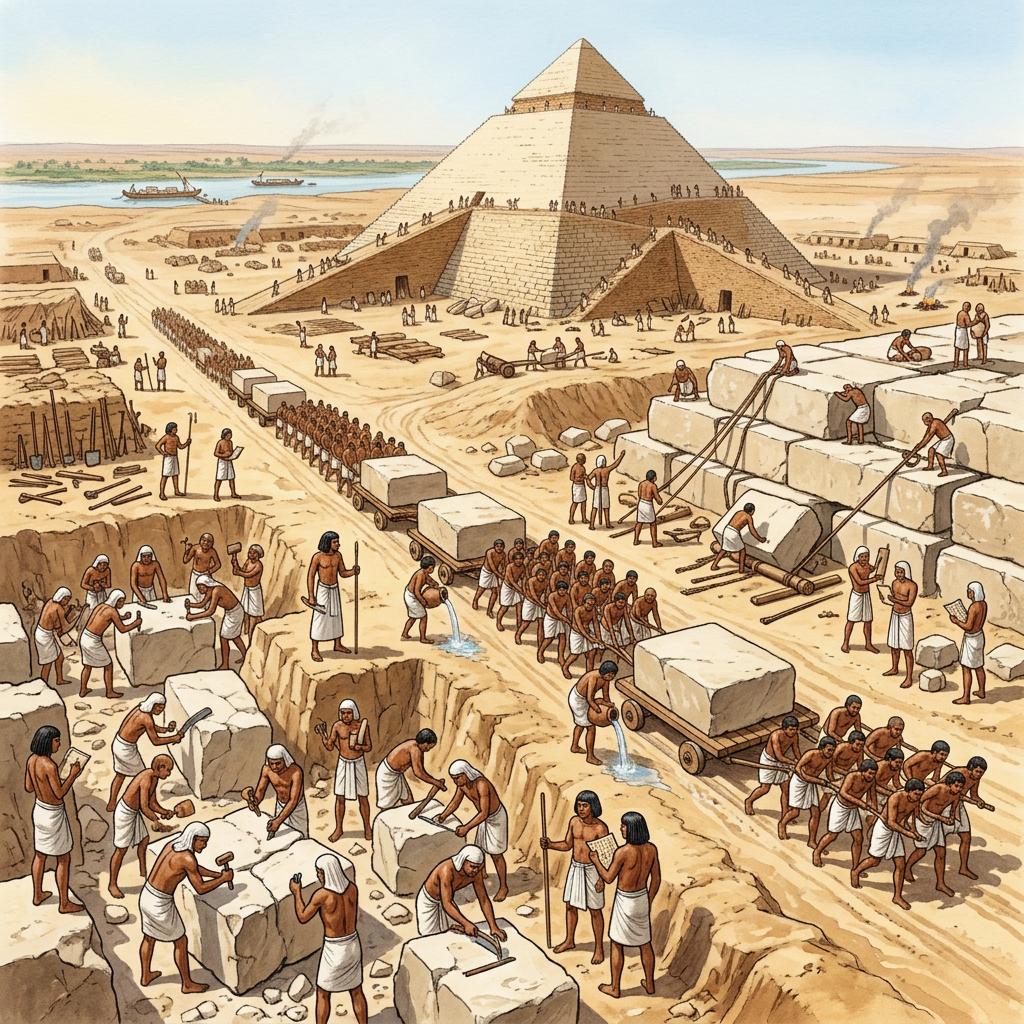
These weren’t the marks of slaves. They were the marks of people with group identity and apparent pride in their work. Modern teams leave similar marks on construction projects. The impulse turns out to be ancient.
Papyrus records discovered at Wadi al-Jarf in 2013 added another layer to this. They represent the oldest papyri ever found in Egypt. One set belonged to a middle manager named Merer who supervised a team transporting limestone blocks. His records described daily logistics including boat journeys, food supplies, and work schedules with the kind of bureaucratic detail that would feel at home in a modern project management report.
Merer’s diary placed boats carrying Tura limestone along a specially constructed waterway system connected to the Nile. Water transport significantly reduced the difficulty of moving the heaviest stones. This logistical detail had been theorized before but never confirmed with primary source documentation until those papyri surfaced.
Hidden Chambers and What Scanning Technology Revealed
For a long time, exploring the Great Pyramid’s interior meant physically crawling through known passages and chambers. That changed significantly in 2017.
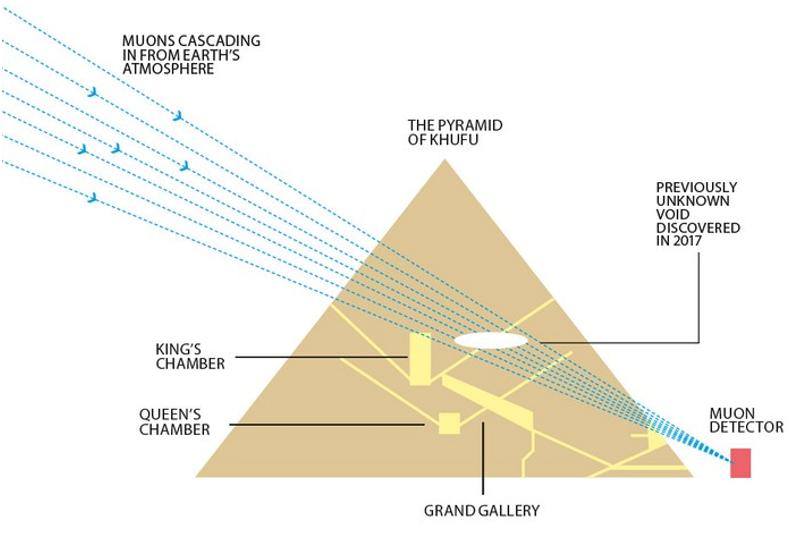
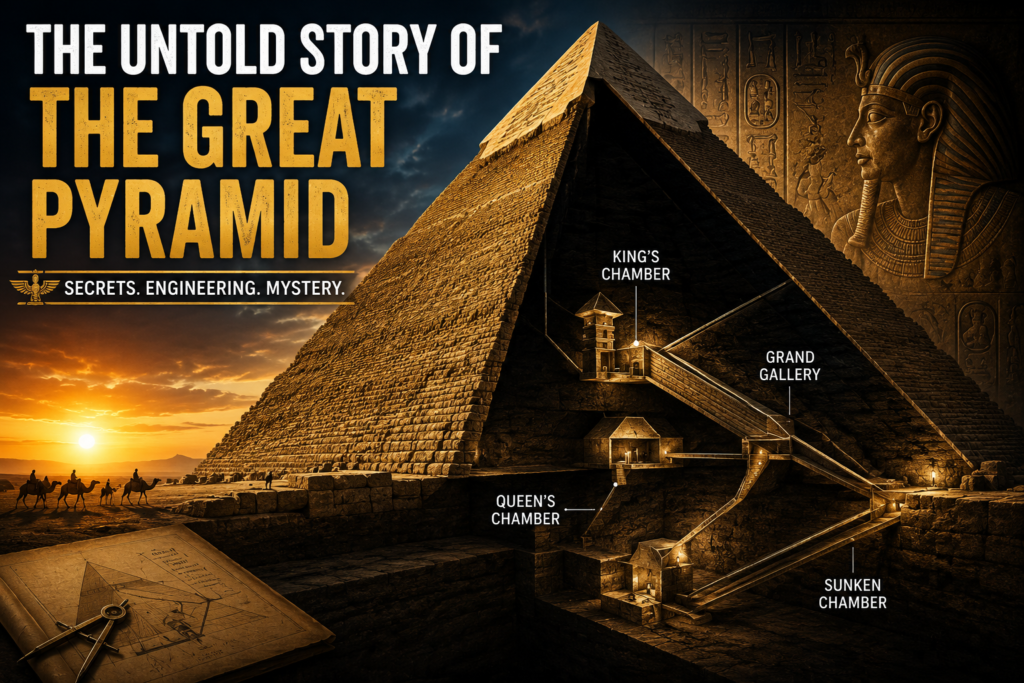
A project called ScanPyramids used muon radiography to peer inside the pyramid without damaging anything. Muons are particles produced when cosmic rays hit the atmosphere. They pass through dense material differently than empty space. Detectors placed inside and around the pyramid essentially created an X-ray image of the interior.
The scans revealed a previously unknown void above the Grand Gallery. The space runs at least 30 meters in length. Researchers called it the Big Void. Its purpose remains debated actively.
Some archaeologists suggest it might be a stress relieving chamber, similar to ones already known above the King’s Chamber. Others propose it could be an undiscovered passage or room. No one has entered it yet. Access requires either finding a hidden entrance or creating one, and the latter raises significant preservation concerns.
More recent scanning work using next generation muon detectors has refined the picture further. A corridor approximately nine meters long and about two meters wide was confirmed in 2023 near the north face of the pyramid. This finding was published and announced by the ScanPyramids team. The corridor sits just behind the original entrance and may connect to other spaces not yet mapped.
The Outer Casing That Almost Nobody Knows About
The Great Pyramid you see today looks rough and stepped. That isn’t how it originally appeared.
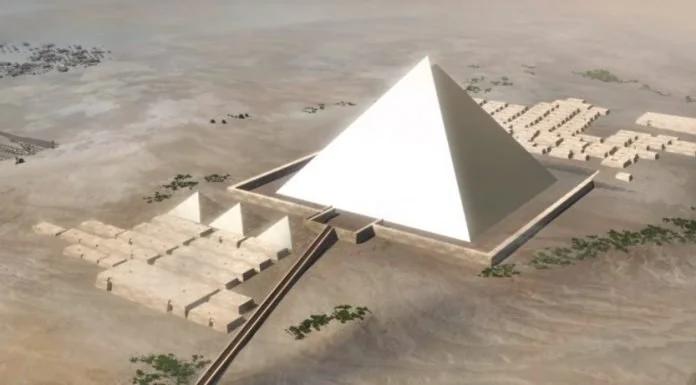
The entire exterior was once covered with highly polished Tura limestone casing stones. These fitted together so precisely that a knife blade couldn’t fit between the joints. The surface reflected sunlight intensely enough that ancient writers described it as blinding white and visible from great distances.
Most of those casing stones were removed over centuries, primarily after an earthquake in 1303 CE loosened many of them. Medieval Cairo builders found the pre-cut, high quality limestone extremely convenient for construction projects. Local mosques, palaces, and city walls contain repurposed pyramid casing stones.
A small number of original casing stones remain at the base of the pyramid on the north side. Standing next to them gives a clear sense of what the entire surface once looked like. The quality of the finish is noticeably different from the rough core stones exposed today.
What the Capstone Might Have Looked Like
The very top of the pyramid, the pyramidion, is missing entirely. No confirmed capstone from the Great Pyramid has ever been found.
Some researchers suggest it may have been covered in gold or electrum, a natural alloy of gold and silver. This theory draws partly from later pyramid texts and artistic depictions of other pyramids from the same era. Whether the Great Pyramid’s capstone was similarly decorated remains genuinely unknown.
A replica pyramidion was placed atop the nearby Pyramid of Khafre for a brief period during a restoration project. Even that smaller demonstration showed how dramatically the original appearance must have differed from what visitors see today.
The Astronomical Alignments That Still Hold Up
Ancient Egyptians didn’t simply orient the pyramid roughly north. They aligned it to true north with a margin of error of only 0.05 degrees.
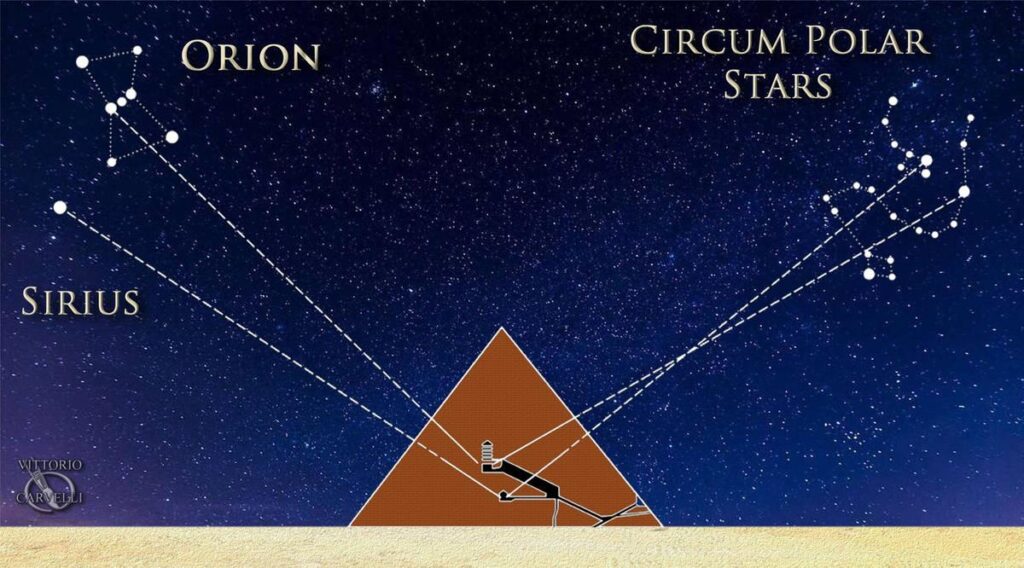
This precision predates the compass. Researchers believe they used stellar observations, specifically circumpolar stars that never set below the horizon in ancient Egypt. By tracking the rising and setting points of specific stars across multiple nights and bisecting the arc, surveyors could establish an accurate north line.
The pyramid also aligns so that on the spring and autumn equinoxes, the sun sets precisely along the pyramid’s northwest diagonal. Standing at the right position during those specific days, you can watch the sun appear to split along the structure’s edge as it descends. This requires precise knowledge of solar movement across the year, not mystical powers, but genuine astronomical sophistication.
The three main Giza pyramids have been proposed to mirror the belt stars of the Orion constellation, a theory advanced by Robert Bauval in the 1980s. Mainstream Egyptology remains divided on this. The alignment is imperfect. Critics argue the match requires selective viewing. Supporters point out the ancient Egyptians strongly associated Orion with Osiris and resurrection. The debate continues.
How to Actually Visit and See What Most Tourists Miss
Getting the most from a Giza visit requires more than showing up and taking the standard photos.
Step One: Go Before 8am
The plateau opens early. Arriving at or before opening time means far smaller crowds around the pyramid base. The early light also hits the stone at a low angle that makes the texture and scale easier to appreciate.
Step Two: Book Interior Access Separately
Entry to the pyramid interior requires a separate ticket from general site admission. Tickets for the King’s Chamber sell in limited numbers daily. Booking through the official Egyptian Ministry of Antiquities website or a registered local tour operator before your visit is strongly recommended.
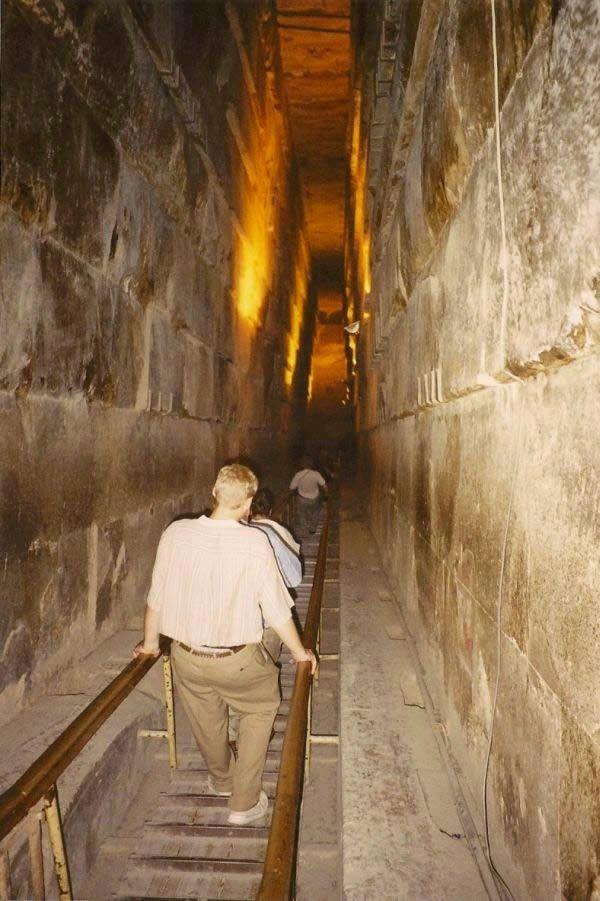
The interior involves a long, low ascending passage that requires walking hunched over for several minutes. Anyone with significant claustrophobia or mobility limitations should research this carefully before committing.
Step Three: Find the Original Casing Stones
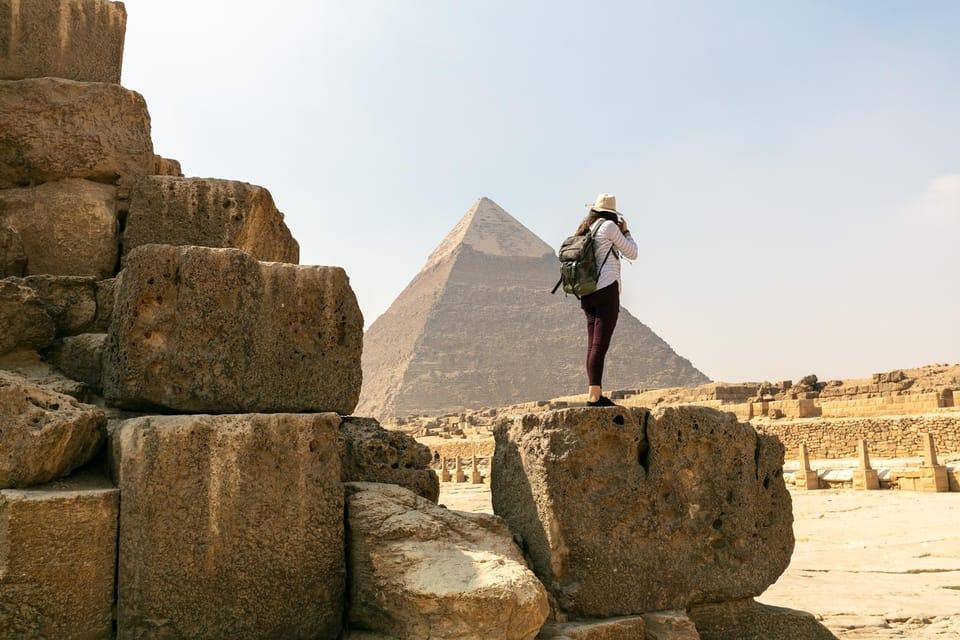
Most visitors photograph the pyramid from the standard viewpoints and leave without seeing the surviving casing stones. These sit at the base on the northern face. No special access is required. Walking around to this section takes about ten minutes from the main entrance area.
Seeing those stones in person genuinely changes the experience. The difference between the rough core blocks and the smooth original casing gives you a physical sense of what was lost over the centuries.
Step Four: Use Google Earth Before You Go
Spending time on Google Earth examining the Giza plateau before visiting helps enormously. You can identify the worker village site, the Sphinx enclosure, the causeway connecting Khufu’s pyramid to its valley temple, and the overall scale relationships between the three main pyramids. Arriving with a mental map already in place lets you make better use of limited time on site.
Step Five: Hire a Licensed Guide for Context
Many visitors walk around the exterior without any understanding of what they’re looking at. Licensed Egyptian guides registered through the official guide association add enormous context. They point out features invisible to untrained eyes, including tool marks, repair patches from different historical periods, and the subtle differences in block size between the lower courses and upper sections.
Common Mistakes Visitors Make
Believing everything sellers near the site tell you. The area around the Giza plateau has a dense concentration of aggressive vendors selling supposed replica artifacts and misleading tour packages. Official tickets are purchased only at designated booths on site.
Skipping the Solar Boat Museum. Right next to the Great Pyramid sits a museum housing an ancient wooden boat found disassembled in a pit near the pyramid. Reassembled over decades, it is one of the most remarkable surviving objects from the ancient world. Most first time visitors walk straight past it.
Expecting silence or solitude. The Giza plateau is one of the most visited tourist sites on earth. Managing expectations before arriving prevents disappointment. Early morning visits reduce but don’t eliminate crowds.
Underestimating the heat and distance. Walking the full perimeter of the Great Pyramid alone covers nearly a kilometer. Add the rest of the plateau and full sun temperatures regularly exceeding 35 degrees Celsius, and dehydration becomes a genuine concern. Carrying water and wearing proper sun protection isn’t optional.
Only looking at the pyramids from outside. The interior experience is genuinely unlike anything else. Even visitors who find enclosed spaces mildly uncomfortable often describe the King’s Chamber as worth the effort. The chamber’s proportions and the acoustic quality inside it produce an atmosphere that photographs simply don’t convey.
What Remains Genuinely Unexplained
Responsible discussion of the Great Pyramid requires being honest about what we actually don’t know.
We don’t know exactly how the heaviest stones were raised. Multiple plausible ramp theories exist. None has been definitively proven. Experimental archaeology projects have demonstrated that various methods are physically feasible. Precisely which methods the builders used at different construction stages remains an open question.
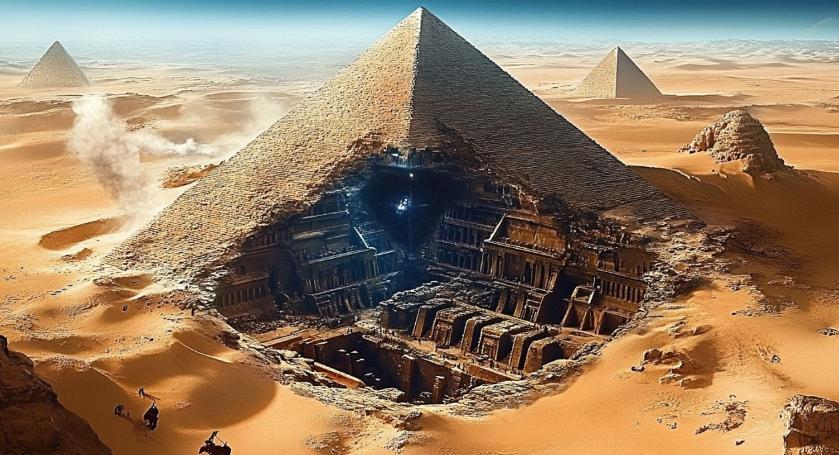
We don’t know with certainty what the Big Void is or whether undiscovered chambers still lie within the pyramid. Current scanning technology provides shape and approximate dimensions but not visual detail.
We don’t know exactly when construction began or how long it took. Traditional estimates suggest around 20 years based on Herodotus, but his account was written roughly 2,000 years after construction. More recent analysis of worker logistics suggests a longer or more complex timeline may have been involved.
These open questions aren’t failures of archaeology. They’re invitations. Every decade brings new tools, new excavations, and new documents that push understanding forward. Merer’s papyri were sitting in the ground until 2013. What else is waiting to surface remains genuinely unknown.
Final Thoughts
The Great Pyramid keeps earning its reputation as one of the most extraordinary things humans have ever built. Not because of mystical explanations or alien theories. Because of what it reveals about human ingenuity, organization, and sheer determination operating at a scale we still find difficult to fully comprehend.
Studying it carefully strips away the familiar story and replaces it with something more interesting. Skilled, organized workers with group identities and documented lunch breaks. Surveyors achieving millimeter precision without digital instruments. Logisticians managing supply chains across hundreds of kilometers of desert and river. Architects designing interior stress management systems that have held up across four and a half thousand years.
None of that needs exaggeration. The actual story, the one the evidence points toward, is more compelling than the myths that replaced it.
Standing next to that warm limestone block at Giza, I wasn’t touching alien technology or divine intervention. Something stranger and more impressive was true. Human beings figured out how to do this. And then they did it.