

A grounded look at where technology is actually heading — written by someone paying close attention.
Artificial IntelligenceQuantum ComputingEdge ComputingGreen TechSpatial ComputingBiotech
A few months back, my colleague walked into a meeting and said he had spent the entire morning letting an AI assistant draft proposals, restructure a spreadsheet, and write follow-up emails — all before his second cup of coffee. He wasn’t bragging. He was genuinely a little unsettled by it.
That reaction tells you something important. We are living through one of those rare windows in history where the pace of change outstrips our ability to process it. Not because the changes are confusing — but because they are arriving all at once, and they are working.
What follows isn’t a futurist’s wishlist. These are the tech trends that are already reshaping industries, changing daily habits, and quietly rewriting what “normal” looks like at work and at home. Some of them you’ve heard of. A few might surprise you.
Who this is for: Whether you’re a business owner, a curious professional, a student, or just someone who wants to make sense of the noise — this breakdown gives you an honest, practical read on where things are actually going.
1. Artificial Intelligence Has Left the Lab — And It’s Everywhere Now
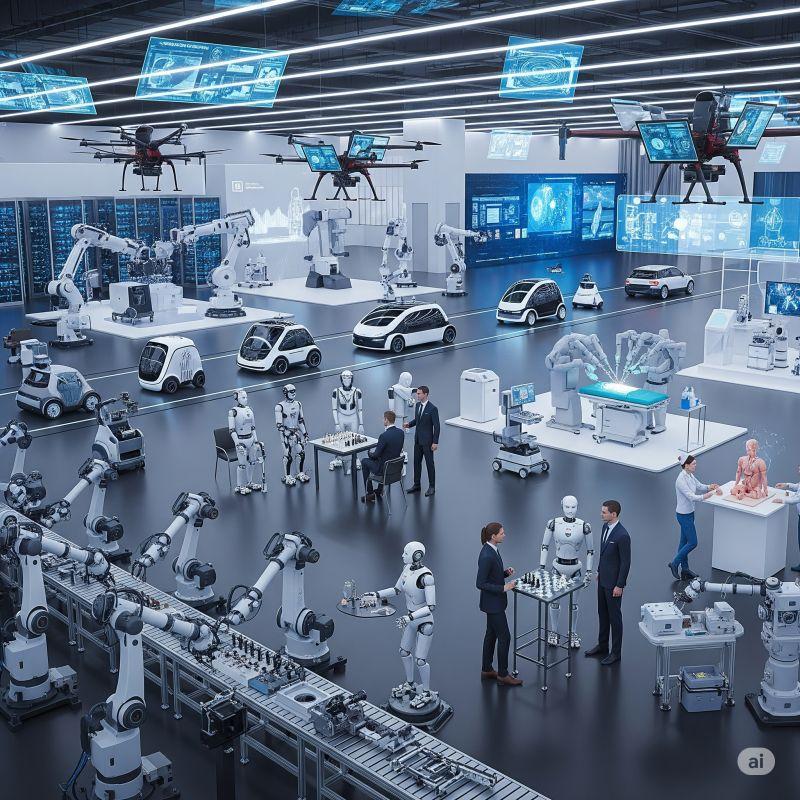
Forget the sci-fi version of AI for a moment. The real story is far more mundane and far more impactful. AI in 2024 and beyond isn’t a robot — it’s the thing suggesting your next email reply, catching fraud on your credit card, reading your medical scans, and generating ad copy in seconds.
Tools like ChatGPT, Claude, Gemini, Copilot, and dozens of vertical-specific AI platforms have made machine intelligence something ordinary people actually use every day. That is genuinely new. Three years ago, AI was something engineers talked about at conferences. Now it’s in your phone’s camera, your customer support chat, and your kid’s school assignment workflow.
What’s actually changing in AI right now
Multimodal AI is the big shift. Models that understand images, audio, documents, and text all at once — not just one input type — are opening up entirely new use cases. You can now photograph a broken appliance and get a repair walkthrough. You can speak into your phone and have a structured project plan appear on screen.
Agentic AI is where things get genuinely interesting. Rather than responding to one question at a time, newer systems can take a goal — “book me a flight, find a hotel, and add it to my calendar” — and actually execute it across multiple tools and websites without needing you to hold its hand at every step.
Real example: A small e-commerce company used an AI tool to automatically generate product descriptions, respond to customer reviews, and flag returns needing human review. Three tasks that used to eat up 15 hours a week now take under 2. The human team shifted to strategy and relationships.
The honest catch
AI hallucinates. It presents false information confidently, especially on niche topics. Anyone using AI tools professionally needs to build verification habits — don’t trust outputs blindly, especially on legal, medical, or factual matters. The technology is powerful, but it still requires human judgment layered on top.
2. Quantum Computing Is Closer Than Most People Realize
Quantum computing has had a reputation as “perpetually five years away.” That reputation is changing. Companies like IBM, Google, Microsoft, and startups like IonQ and Rigetti have made genuine leaps recently, and governments around the world are pouring billions into quantum research.
Here’s the clearest way to understand why it matters: traditional computers use bits that are either 0 or 1. Quantum computers use qubits, which can be both at once thanks to a property called superposition. Combined with entanglement, this allows quantum systems to process certain types of problems at speeds that make even today’s fastest supercomputers look slow.
Where quantum computing will actually matter first
Drug discovery and materials science are the most immediate targets. Simulating molecular interactions is extraordinarily hard for classical computers. Quantum systems can do this natively, which means pharmaceutical companies could develop drugs exponentially faster — testing billions of molecular combinations virtually before ever running a lab experiment.
Cybersecurity is the other major — and slightly alarming — domain. Quantum computers will eventually be able to crack most current encryption methods. The good news is that governments and tech companies are already developing post-quantum encryption standards. The bad news is that many organizations are nowhere near ready for this transition.
Practical takeaway: If your business handles sensitive long-term data, start paying attention to NIST’s post-quantum cryptography standards. This isn’t panic territory — but it’s not something to ignore for the next decade either.
3. Edge Computing Is Quietly Powering the Smart World
Every time you hear about smart factories, autonomous cars, real-time health monitoring, or instant video processing — edge computing is probably involved. Most people have never heard the term. Nearly everyone benefits from it daily.
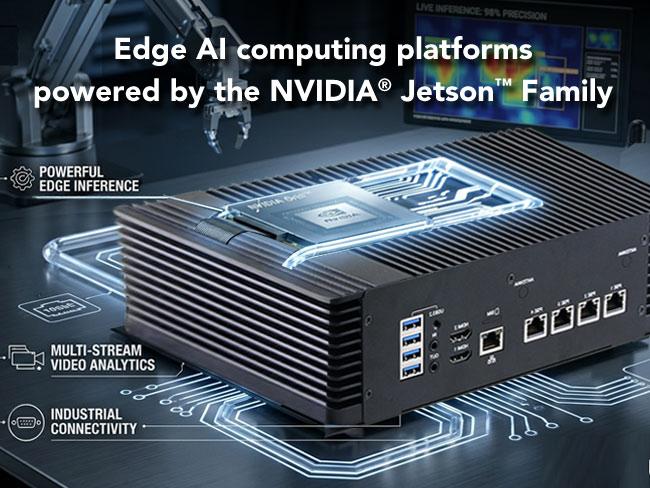
Traditionally, data gets sent to a distant cloud server, processed, and returned. That round trip takes time. For a lot of applications, milliseconds matter enormously. Edge computing solves this by processing data locally — on the device, or on a nearby server — before it ever touches a central cloud.
Why this matters in the real world
Manufacturing floors use edge computing to detect product defects in real time, stopping a bad batch before it moves further down the line. Autonomous vehicles rely on it to make split-second driving decisions — sending data to the cloud and waiting for a response would be catastrophically slow at 100 km/h. Hospitals are using edge-enabled wearables that monitor patients continuously and alert staff instantly when something goes wrong.
Retailers are deploying edge-powered cameras that track inventory in real time, automatically triggering restocking orders without a human scanning shelves. None of this is hypothetical. It’s running right now in warehouses and stores you’ve probably visited.
Tools & Platforms to Know
AWS Wavelength, Azure Edge Zones, Google Distributed Cloud, and NVIDIA’s Jetson platform are the dominant players in edge computing infrastructure. If your business is exploring IoT or real-time analytics, these are worth understanding.
4. Sustainable Tech Is No Longer Optional
Green technology has moved from a nice-to-have to a competitive necessity. Investors screen for ESG (Environmental, Social, Governance) criteria. Regulators in Europe and increasingly elsewhere are mandating emissions disclosures. Customers — especially younger ones — actively choose brands that demonstrate environmental accountability.
But beyond the compliance pressure, something more fundamental is happening: clean energy is becoming the cheaper energy. Solar costs have dropped over 90% in the last decade. Wind energy is competitive with coal in most markets. Battery storage is advancing rapidly, addressing the intermittency problem that once made renewables impractical at scale.
Green tech innovation that’s actually moving fast
Solid-state batteries are one of the most exciting near-term breakthroughs. They promise significantly higher energy density than lithium-ion, faster charging, and far better safety profiles — no more exploding phones or thermal runaway in EVs. Toyota and several startups have prototypes in advanced stages.
Carbon capture technology is scaling. Direct air capture facilities — machines that literally pull CO₂ from the atmosphere — are becoming real projects, not just research papers. Companies like Climeworks have operational plants. The cost is still high, but it’s falling fast.
Green hydrogen, produced using renewable electricity, is emerging as a viable fuel for heavy industry and long-haul transport — sectors that can’t easily electrify directly. Several countries are building the infrastructure to produce and distribute it at scale.
Business angle: Companies that build sustainability into their operations now — not as a PR exercise but as a structural efficiency — will carry lower energy costs and face far fewer regulatory headaches in the next decade. The ones waiting for the law to force them are going to face that transition on someone else’s timeline.
5. Spatial Computing and Augmented Reality Are Finding Their Footing
The metaverse hype cycle came and mostly went. What’s left behind is actually more interesting: spatial computing — the merging of digital information with physical space — is finding real, practical applications stripped of the buzzword baggage.
Apple’s Vision Pro launched a new conversation about what augmented and mixed reality could look like when done at a premium level. Microsoft’s HoloLens has been quietly powering industrial applications for years. Meta’s Quest platform has found a genuine foothold in enterprise training and fitness applications.
Where spatial computing is actually working
Surgical planning is one of the most compelling real-world uses. Surgeons can now use AR overlays to visualize a patient’s internal anatomy in 3D during procedures, improving accuracy and reducing risk. Companies like Medivis are already deploying this in operating rooms.
Training and simulation is another high-value application. Airlines use VR flight simulators extensively. Military organizations use immersive training environments. Construction companies are using AR headsets to overlay building plans onto physical job sites, catching errors before concrete gets poured.
Retail is experimenting with AR try-on features — IKEA’s app lets you visualize furniture in your actual room. Warby Parker lets you try glasses using your phone camera. These aren’t gimmicks; they measurably reduce return rates.
Lesson learned: The biggest mistake companies make with AR/VR is chasing novelty instead of solving a real problem. The technology that sticks is the kind that makes a specific task genuinely easier — not the kind deployed just to seem cutting-edge.
6. Biotech and Health Tech Are Having a Moment
COVID-19 accelerated biotechnology by at least a decade. The speed at which mRNA vaccines were developed, tested, and deployed — something that would have seemed impossible in 2019 — demonstrated what modern biotech infrastructure is capable of when the stakes are high enough.
That same infrastructure is now being applied to a long list of other conditions. mRNA technology is being explored for personalized cancer vaccines — treatments that target the specific mutations in an individual patient’s tumor rather than a one-size-fits-all approach. Early clinical trials are genuinely promising.
Health tech you can touch right now
Wearable health monitors have matured significantly. The Apple Watch can detect atrial fibrillation. Continuous glucose monitors like the Dexcom G7 are becoming mainstream for diabetics — and are being explored for metabolic insights in healthy people. Devices like the Oura Ring track sleep stages, heart rate variability, and recovery metrics with surprising accuracy.
Telehealth normalized remote care in a way that probably won’t reverse. Platforms like Teladoc, Hims & Hers, and Nuvation Health have built durable businesses around the insight that most routine care doesn’t require an in-person visit.
AI-assisted diagnostics are entering clinical settings carefully but meaningfully. FDA-cleared AI tools are being used to detect diabetic retinopathy from eye scans, flag suspicious radiology findings, and assist in pathology review — handling the volume work so specialists can focus on the complex calls.
Tools Worth Knowing
For personal health tracking: Apple Health, Oura Ring, Whoop, and CGMs from Dexcom or Abbott (Libre). For healthcare professionals exploring AI diagnostics: Viz.ai, Aidoc, and Enlitic are among the more established platforms.
Common Mistakes People Make When Navigating Tech Trends
Staying ahead of tech trends is valuable. Getting caught in the wrong patterns while doing it isn’t. Here are the errors that show up most often — from businesses and individuals alike.
- Chasing every trend instead of asking which ones are actually relevant to your specific situation. Not every company needs an AI strategy. But every company should understand which of their workflows could change.
- Mistaking hype for adoption. A lot of breathless coverage describes technology that’s early-stage. Ask: where is this running in production, at scale, with measurable results?
- Waiting for the “final” version before engaging. The companies that are most fluent with AI tools today didn’t wait — they experimented early, made mistakes, and learned faster.
- Ignoring the human side. Every major technology shift reshapes roles and workflows. Companies that involve their people early — rather than announcing changes from above — manage the transition far more smoothly.
- Assuming security is someone else’s problem. As your tech stack grows, so does your attack surface. Cybersecurity isn’t a one-time checkbox. It’s an ongoing discipline that needs to scale with your tooling.
A Practical Roadmap: How to Stay Ahead Without Getting Overwhelmed
Following every tech trend simultaneously is a path to exhaustion and distraction. Here’s a more sustainable approach to staying genuinely informed and ready.

- Pick your relevant three. From the trends above, identify the two or three that most directly touch your industry or role. Go deep on those. Skim the others for awareness, not expertise.
- Read primary sources, not just summaries. Original research from Google DeepMind, Anthropic, IBM Research, or NIST gives you far more signal than most media coverage. Set up Google Scholar alerts for your priority topics.
- Experiment with low stakes. Most AI tools offer free tiers. Edge computing platforms offer sandbox environments. Build familiarity through actual use — not just reading about it.
- Find a community. Local tech meetups, Slack communities, LinkedIn groups focused on specific domains, and newsletters like Import AI, The Rundown, or MIT Technology Review keep you in the loop without requiring hours of personal research daily.
- Build a review rhythm. Once a quarter, spend a couple of hours looking at what’s changed in your priority areas. The goal isn’t to know everything — it’s to notice when something meaningful shifts.
Avoid this trap: Consuming tech content can feel like progress when it’s actually just entertainment. The real test is: did you change how you do something? Did you try a new tool, update a process, or make a better decision because of what you learned? Information that never changes behavior has low practical value.
The Unexpected Things That Surprised Me
Spending time genuinely immersed in these trends — not just reading headlines but actually using the tools, talking to practitioners, and watching real deployments — surfaces a few things that consistently catch people off guard.
First, the gap between what AI can do and what most organizations are using it for is enormous. The technology has far outpaced organizational adoption. Most companies are using AI for simple content generation when it could be redesigning entire workflows.

Second, the energy cost of modern AI is a real and underreported issue. Training large models consumes vast amounts of electricity. Running millions of inference calls daily adds up. As AI scales, the intersection with sustainability becomes increasingly critical — and increasingly interesting from an innovation standpoint.
Third, the most impactful applications aren’t always the flashiest ones. Predictive maintenance on industrial equipment — AI that tells a factory when a machine is about to fail before it does — saves companies millions of dollars. It’s not glamorous. It doesn’t make the cover of a magazine. But it’s transformative.
“The technologies that quietly improve the economics of doing hard things tend to matter more, over time, than the ones that generate the loudest conversations.”
Where Does This Leave Us?
The future of innovation isn’t a single breakthrough moment — it’s a continuous layering of capabilities, each one building on what came before. AI becomes more useful when paired with edge computing. Quantum computing makes AI more powerful. Green energy makes all of it more sustainable. Biotech gives medicine its next toolkit.
None of these trends exists in isolation. The most exciting possibilities come from their intersections. A quantum-enhanced AI system that can simulate drug molecules and personalize treatment plans would have seemed like science fiction twenty years ago. Right now, researchers are working toward exactly that.
The most useful thing anyone can do — whether you’re building a company, choosing a career path, or just trying to make sense of the world — is to stay genuinely curious rather than defensively skeptical or uncritically enthusiastic. Ask what’s real. Ask who’s actually using this. Ask what problem it solves that wasn’t solvable before.
That curiosity, applied consistently, will serve you far better than any single trend — because the specific technologies will keep changing. The capacity to evaluate and adapt to them is what compounds over time.