
I still remember the first time I saw a pink beach in a photo and thought someone had messed with the saturation slider in Lightroom. It looked fake. Too perfect. Like a screenshot from a video game or a stock photo someone edited for a travel ad.
Then I actually stood on one.
The sand really was pink. Not neon, not cotton candy, but a soft blush color that shifted depending on the light, the tide, and even how wet the sand was underfoot. That trip changed how I look at travel photos now. Some things really do look better in person than online, and pink beaches are one of them.
If you’ve ever scrolled past one of these images and wondered whether it’s real, or whether it’s worth planning a trip around, I want to walk you through what I’ve learned from visiting a few of these places myself and researching several more that are on my list.
Why Some Beaches Are Actually Pink
Before getting into specific beaches, it helps to understand why the sand looks the way it does. This isn’t dye, and it isn’t a filter.
Most pink sand gets its color from tiny bits of coral, shells, and calcium carbonate skeletons of microscopic organisms called foraminifera. These little creatures have reddish or pink shells, and over time, as waves crash against reefs, their shells break down into fragments and mix with the white sand.
The result is sand that looks pink from a distance but, if you scoop up a handful, you’ll actually see a mix of white, red, and pink specks. Your eyes blend it all together into that dreamy shade.
I learned this the hard way on my first trip. I bent down expecting to see solid pink grains and instead saw what looked like confetti. It took a step back, literally, to see the color the way it appears in photos.
The Beaches Worth Knowing About
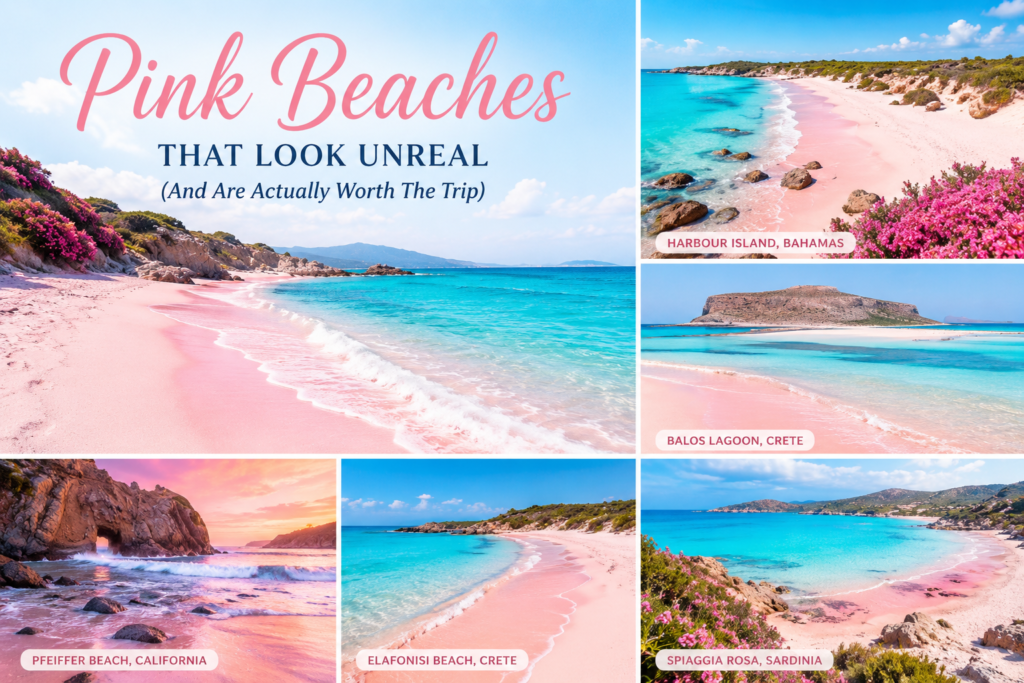
There are more pink beaches around the world than most people realize. Some are famous and packed with visitors. Others are quiet spots that barely make it onto travel blogs. Here are the ones that stood out to me.
Harbour Island, Bahamas
This is probably the most photographed pink beach on the planet, and for good reason. The three-mile stretch of Pink Sands Beach lives up to its name, especially in the late afternoon when the sun hits it at an angle.
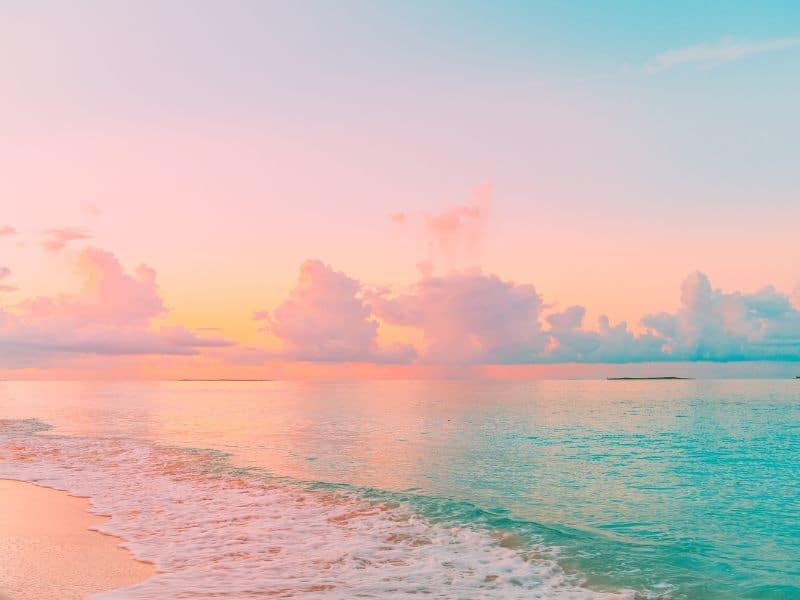
I went during the dry season, and honestly, the color was more subtle than I expected from photos. It’s there, but it’s soft. If you want that vivid pink you see on Instagram, go right before sunset. The golden light brings out the pink tones way more than midday sun does.
Getting there takes some effort. You fly into North Eleuthera, then take a short boat ride to the island. Golf carts are the main way to get around once you’re there, and renting one is honestly part of the fun.
Elafonisi Beach, Crete
This one surprised me. Elafonisi is technically a lagoon area on the southwestern tip of Crete, and the pink comes from crushed shells mixing with white sand near the shallow water.
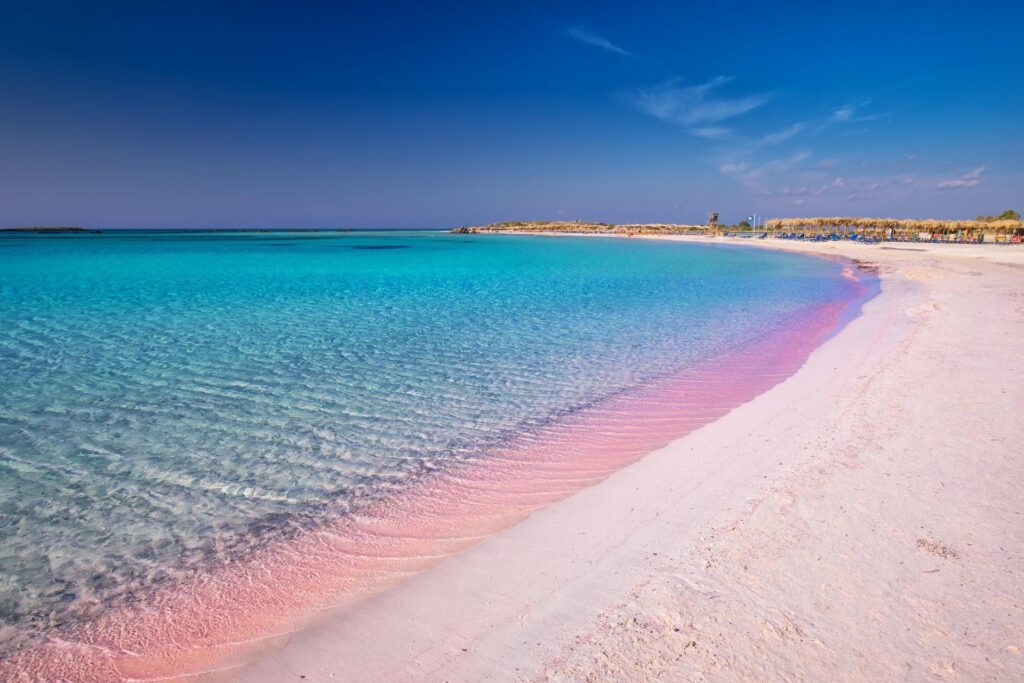
The tricky part is timing. During peak summer, tour buses show up early and the beach gets crowded fast. I made the mistake of arriving around 11 in the morning once, and it was already packed with people and beach umbrellas everywhere.
If you’re planning a visit, get there before 9am or head over late in the afternoon after the tour groups leave. The shallow, warm water here is also great for kids, so it’s a solid family option if that matters to you.
Pink Lake and Pfeiffer Beach, California
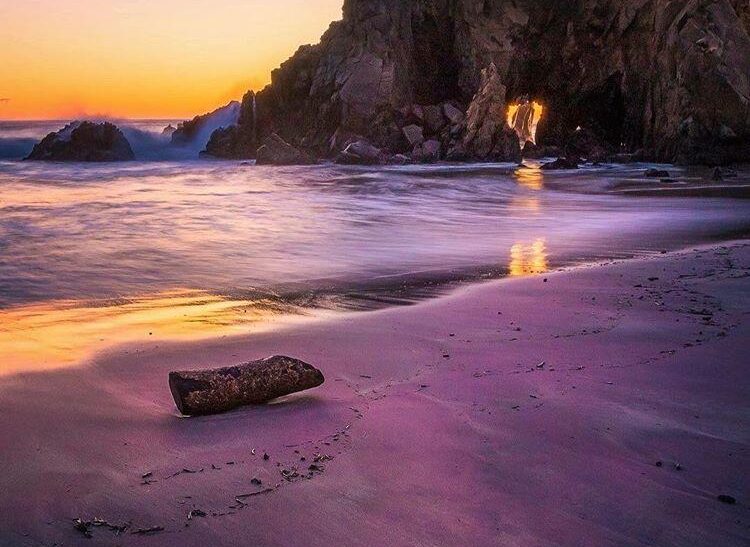
Pfeiffer Beach in Big Sur isn’t purely pink like the others, but it has a purple-pink tint mixed into the sand thanks to manganese garnet deposits washing down from the hills nearby.
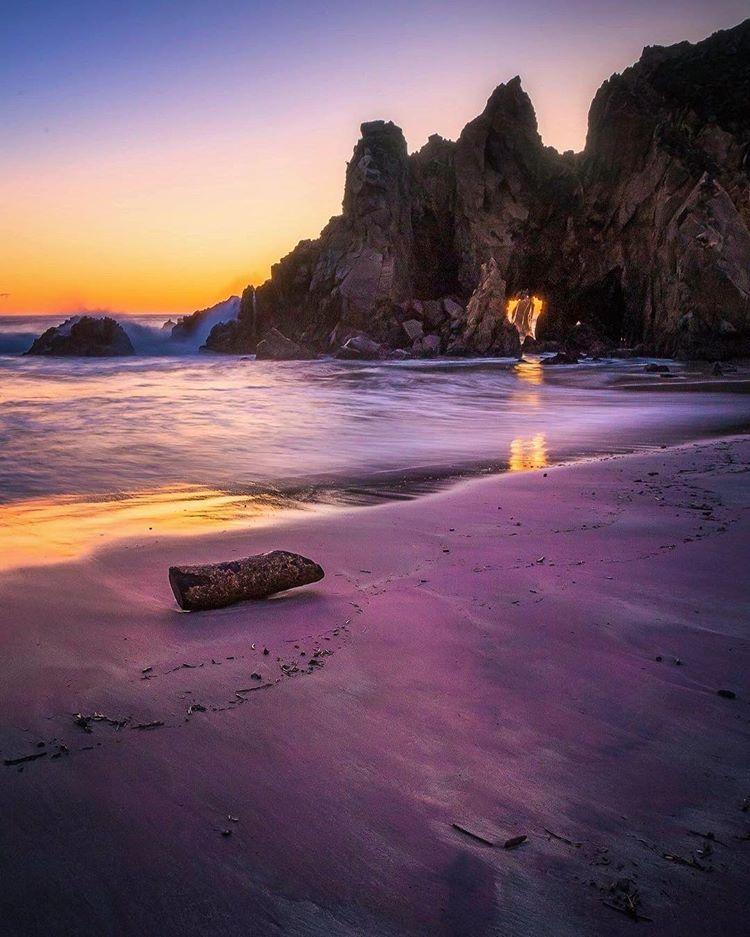
What makes this beach different is that the color shows up more after it rains, when the sand gets wet and the purple-pink hue becomes more visible. I visited on a dry day once and barely noticed any color at all. Went back a few months later after a rainy week, and the difference was noticeable.
This spot is also known for Keyhole Arch, where sunlight passes through a rock formation during certain times of year. Worth checking a tide chart before you go, since access depends on the tide level.
Balos Lagoon, Crete
Yes, Crete shows up twice on this list, and that’s not a coincidence. Balos Lagoon has a similar pink shell situation to Elafonisi, but it feels more remote and dramatic because of the surrounding cliffs and turquoise water.
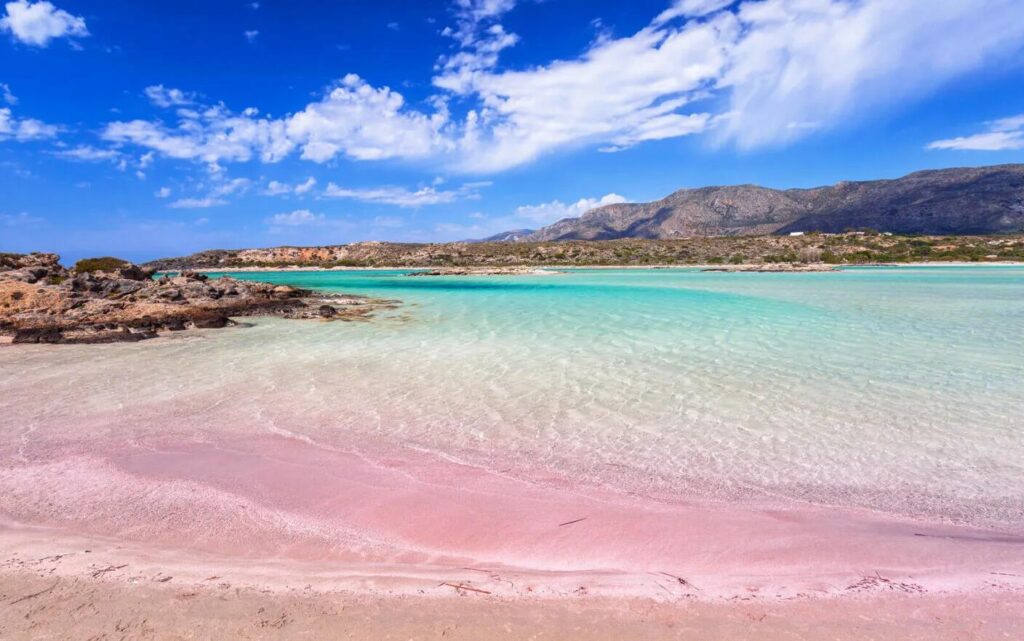
Getting there is part of the challenge. You either take a rough gravel road by car, which I do not recommend unless your rental car insurance covers everything, or you catch a boat from Kissamos port. I took the boat option and it was worth every penny just to skip the dusty drive.
Spiaggia Rosa, Sardinia
This one is tricky because access is restricted. Spiaggia Rosa, or Pink Beach, is part of a protected marine park near Budelli Island, and walking on the sand itself is banned to protect it from erosion.
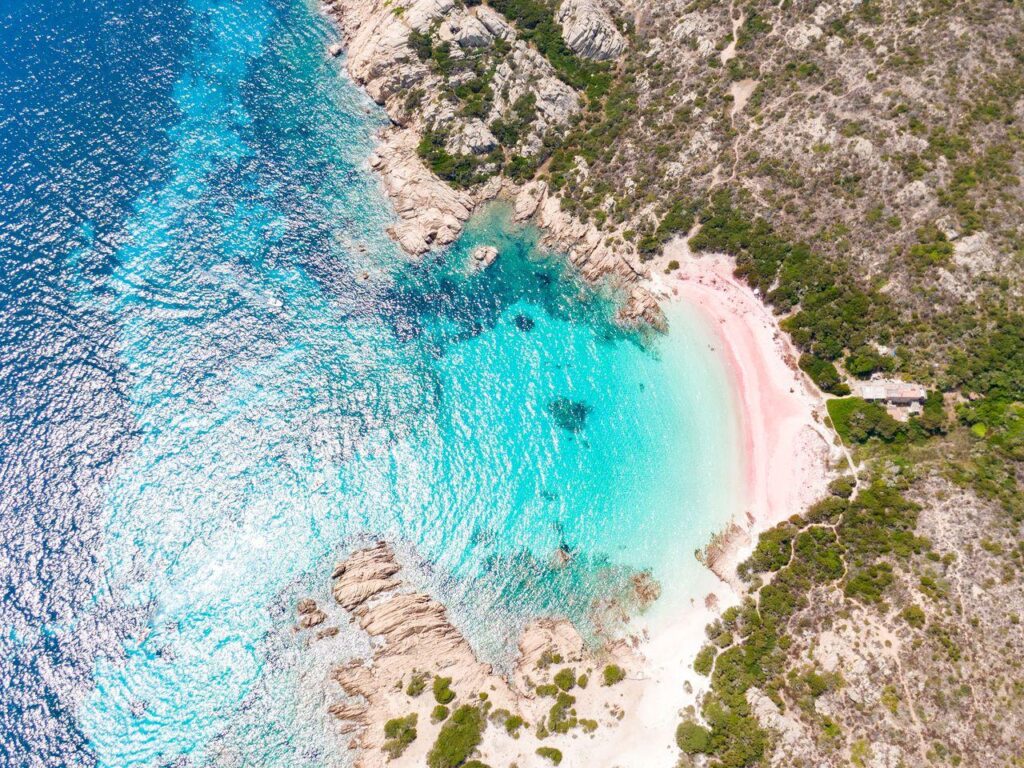
You can still see it from a boat tour, which is how most visitors experience it now. I haven’t made it here yet myself, but everyone I’ve talked to who has done the boat tour says the color is more visible from certain angles on the water than others, so a good zoom lens on your camera helps.
Planning A Trip: What I Wish Someone Told Me
Visiting a pink beach sounds simple until you actually plan the logistics. Here’s what I’ve picked up through trial and error.
Light matters more than the beach itself
The pink color isn’t constant throughout the day. Harsh midday sun tends to wash it out, making the sand look more white or beige. Early morning and late afternoon light bring out the pink tones dramatically better.
If photography matters to you, plan your visit around golden hour instead of convenience.
Weather changes everything
I mentioned this with Pfeiffer Beach, but it applies elsewhere too. Wet sand often shows deeper, richer colors than dry sand. If it’s rained recently, don’t assume that ruins your trip. It might actually improve the view.
Don’t expect Barbie-pink everywhere
This is probably the biggest disappointment I see from first-time visitors. Some beaches have subtle pink tones that require the right light and a bit of imagination. If you go in expecting a hot pink beach like the edited photos online, you might feel let down.
Manage your expectations, and you’ll actually appreciate what you’re looking at.
Protect the sand
Several of these beaches, especially Spiaggia Rosa, have rules against removing sand or shells as souvenirs. It sounds tempting, but taking sand contributes to erosion over time, and some places enforce fines.
Leave it where it belongs. Take photos instead.
Step-By-Step: How To Actually Plan Your Visit
Here’s a simple process I use whenever I’m researching a pink beach trip.
Step 1: Pick your beach based on accessibility, not just looks. Some locations, like Harbour Island, require flights and boat transfers. Others, like Pfeiffer Beach, are a scenic drive away if you’re already in California. Match the destination to how much travel effort you’re willing to put in.
Step 2: Check the season. Elafonisi and Balos get overwhelmed with tourists in peak summer. Visiting in shoulder season, like late spring or early fall, usually means fewer crowds and better weather.
Step 3: Time your visit around light, not convenience. Aim for the first two hours after sunrise or the last two hours before sunset for the most vivid pink tones.
Step 4: Bring the right gear. A polarizing filter for your camera lens cuts glare off the water and sand, making colors pop more in photos. Even a phone camera benefits from shooting in low-glare conditions.
Step 5: Check local rules before you go. Some beaches restrict where you can walk or swim to protect the ecosystem. A quick search on the local tourism board’s website saves you from surprises.
Mistakes People Commonly Make
I’ve made a few of these myself, and I’ve watched other travelers make the same ones.
Showing up at noon expecting vivid colors is probably the most common mistake. The sun overhead flattens colors and creates harsh shadows.
Skipping the research on access routes is another one. Balos Lagoon by car sounds adventurous until you’re bouncing along a gravel road for 40 minutes wondering if your suspension will survive.
Assuming every pink beach is swimmable is also a mistake. Spiaggia Rosa is a look-but-don’t-touch situation, and treating it like a regular beach day will disappoint you.
Lastly, forgetting sun protection because you’re distracted by the scenery. Pink sand still reflects sunlight, and I’ve gotten sunburned faster on these beaches than on regular white sand ones, probably because I was too busy taking photos to reapply sunscreen.
A Few Honest Observations
Not every pink beach photo you see online reflects reality. Some are heavily edited, with saturation pushed way past what your eyes would actually see standing there. That doesn’t mean these places aren’t beautiful. It just means you should adjust your expectations a little.
The beaches that impressed me most weren’t necessarily the most famous ones. Smaller, less visited spots often had a quieter charm that made the experience feel more personal, without hundreds of other tourists doing the same photo pose in front of you.
If you’re chasing that perfect pink beach photo for social media, that’s fine, but try to actually enjoy the place while you’re there too. Put the phone down for a few minutes. Feel the sand. Watch how the color shifts as clouds pass overhead. That’s the part photos never quite capture.
Final Thoughts
Pink beaches are one of those rare travel experiences that actually live up to the hype, as long as you go in with realistic expectations about timing, weather, and access.
Whether you make it to Harbour Island’s famous shoreline, the shallow waters of Elafonisi, or the purple-pink sands after a Big Sur rainstorm, the experience of standing on sand that color is genuinely memorable.
Do your research, time your visit around good light, and respect the local rules protecting these places. That’s really all it takes to turn a strange looking photo online into a trip you’ll actually remember.