
The History Class That Changed How I See the World
I used to hate history class. Not because it was hard — because it felt pointless. A bunch of dates, dead people, and events I couldn’t connect to anything real in my life. My teacher would drone on about empires and battles, and I’d sit there wondering why any of it mattered.
Then one afternoon, a substitute teacher walked in and did something completely different. Instead of reciting facts, she asked us one question: “If one person had made a different decision at the right moment, would your life look anything like it does today?”
That question cracked history open for me.
Because the truth is — and this hit me harder the older I got — the world we live in right now, the values we hold, the science we benefit from, the rights we exercise, the technology in our pockets — almost all of it traces back to specific individuals who made bold, often terrifying choices at pivotal moments in time.
Here are some of the most remarkable historical figures who genuinely redirected the course of human civilization — and what their lives can still teach us today.
Leonardo da Vinci — The Man Who Refused to Pick a Lane
Most people know Leonardo da Vinci as the painter behind the Mona Lisa and The Last Supper. What most people don’t fully appreciate is that painting was almost a side project.
“Leonardo’s notebooks — thousands of pages of drawings, observations, and designs — reveal a mind that was centuries ahead of its time. Functional concepts for flying machines, solar power, armored vehicles, and a rudimentary robot fill page after page. Human anatomy became another obsession, pursued so relentlessly that he dissected dozens of corpses in secret when the Church made such work illegal.”
“Creativity barely scratches the surface of what made Leonardo remarkable. What truly set him apart was a methodological obsession with firsthand observation over accepted authority — a habit of mind that would eventually become the foundation of modern science.”
What Leonardo Actually Teaches Us
The lesson most people miss about Leonardo isn’t about talent. It’s about the courage to take your curiosity seriously. In his era, people were expected to specialize, stay in their lane, and defer to established wisdom. Leonardo ignored all of that.
He kept a notebook with him at all times and filled it constantly. If you’ve ever tried journaling your ideas and felt embarrassed by their randomness, Leonardo’s notebooks are a reminder that sprawling, undisciplined curiosity is often where the best thinking lives.
His biggest “mistake” — if you can call it that — was leaving so many projects unfinished. He struggled to complete commissions, often abandoning work that frustrated his patrons. But the incomplete projects still influenced every artist and thinker who came after him. Imperfect output shared with the world beats perfect work locked in your head.
Harriet Tubman — Courage as a Strategic Tool
When people talk about Harriet Tubman, the conversation usually focuses on bravery. And yes, what she did was extraordinarily brave. But when I started reading more about how she actually operated — the planning, the timing, the psychological strategies she used — I realized bravery was the least interesting thing about her.

“Harriet Tubman escaped slavery in 1849 — and then did something almost unimaginable. Voluntarily, she returned thirteen times to guide approximately seventy enslaved people to freedom through the Underground Railroad network. Not a single person she led was ever lost. Disguises, coded messages, trusted contacts, and an almost military-level understanding of terrain and timing made every mission possible.”
She later served as a spy and scout for the Union Army during the Civil War, leading a raid that liberated more than 700 enslaved people in a single night. She was so effective that the Union paid male scouts three times more than her — a fact that should make anyone paying attention angry and unsurprised simultaneously.
The Strategy Behind the Courage
What Tubman understood, and what makes her legacy so enduring, is that freedom isn’t just an ideal — it’s something you have to engineer. She built systems, cultivated trust, managed risk, and adapted constantly. When one route became compromised, she found another.
Her life is a masterclass in executing under impossible conditions. She didn’t wait for perfect circumstances. She moved when the window was open, even when the window was terrifying.
The lesson she leaves isn’t just moral. It’s operational. When you’re trying to change something, you need a plan, trusted allies, and the willingness to move before you feel fully ready.
Nikola Tesla — Brilliance Without Credit, Impact Without Recognition
If you’ve ever charged a device wirelessly, used an electric motor, or benefited from alternating current electricity — and you do, every single day — you’re living inside Nikola Tesla’s vision.
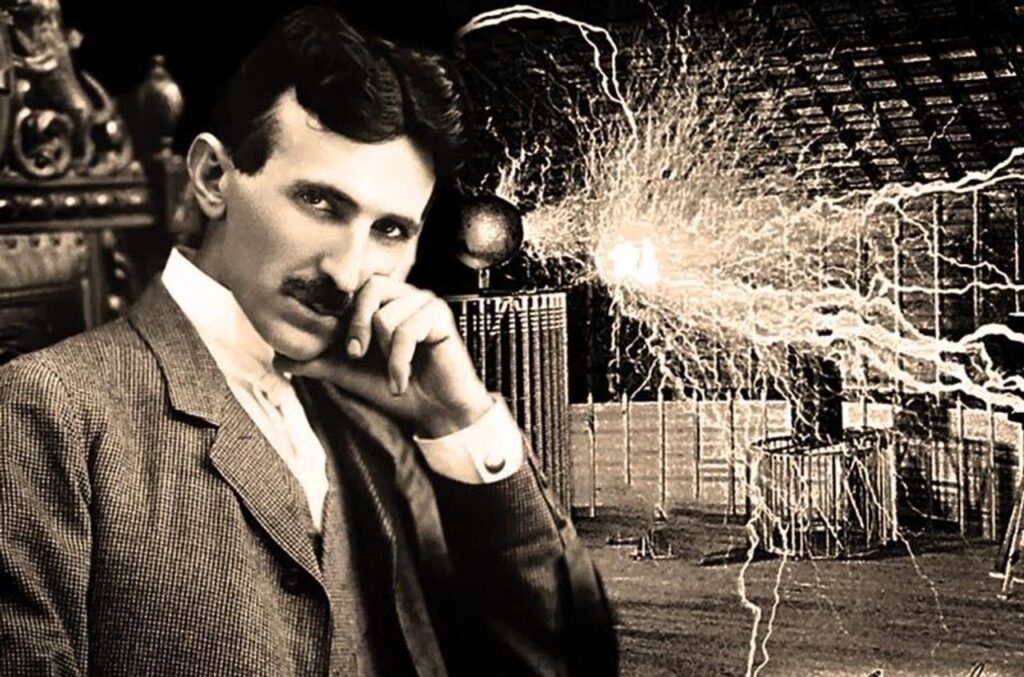
Tesla is one of history’s most complicated figures. A Serbian-American inventor who arrived in the United States in 1884, he worked briefly for Thomas Edison before a legendary falling out that defined both their careers. Tesla’s belief in AC (alternating current) electricity clashed directly with Edison’s investment in DC (direct current), and the resulting “War of Currents” is one of the most consequential scientific debates in human history.
Tesla won the technical argument. AC electricity is the standard that powers homes and cities globally. But Edison won the PR war. For most of the 20th century, Tesla’s contributions were significantly underappreciated while Edison was celebrated as the quintessential American inventor.
What Tesla’s Life Actually Shows
Tesla was a genius who died broke and largely forgotten. His later years were marked by increasingly eccentric behavior, failed investments, and ideas that veered from visionary to questionable.
The uncomfortable truth his story reveals is that being right — even profoundly, civilization-changingly right — doesn’t protect you from being outmaneuvered by someone with better business sense and a better publicist.
His life is a hard reminder that transformative ideas need champions who understand both the technical and human side of change. Tesla had the ideas. He lacked the organizational and political instincts to fully realize them.
The good news is that history eventually gets things right — or at least righter. Today Tesla’s name adorns one of the most discussed technology companies on the planet, and his contributions are widely acknowledged. Being ahead of your time is genuinely brutal in the short term and genuinely vindicating in the long run.
Marie Curie — Rewriting the Rules of Who Gets to Discover
“Here is something I didn’t fully appreciate until I went looking: Marie Curie won two Nobel Prizes — Physics in 1903 and Chemistry in 1911. No other person in history has claimed that distinction across two separate sciences. Beyond the awards, her research pioneered the entire field of radioactivity — a term she personally coined — and her development of mobile X-ray units saved countless soldiers’ lives during World War I.”

“All of this happened while the world actively tried to stop her. Polish universities refused her entry because of her gender, pushing her to relocate to Paris and attend the Sorbonne — one of barely a handful of women brave enough to walk through those doors. Even her Nobel Prize nomination wasn’t safe; the committee initially attempted to strike her name from the list entirely.”
She insisted on being included. And then she won it.
Curie’s Real Legacy
What strikes me most about Marie Curie isn’t the prizes or even the science — extraordinary as both are. It’s the fact that she operated with complete intellectual seriousness in environments that treated her as a curiosity or an intruder.
She didn’t waste energy performing outrage at a system that was genuinely unfair to her. She just kept working. Harder and more rigorously than almost anyone around her.
Her research eventually killed her. Decades of radiation exposure led to aplastic anemia, and she died in 1934. Her personal notebooks are still so radioactive that researchers who want to study them must sign a waiver and handle them in protective gear.
The woman changed science so completely, and at such personal cost, that her original papers remain literally dangerous more than 90 years after her death. That’s not a metaphor. That’s physics.
Nelson Mandela — Long Game Thinking in Real Time
There are people who endure hard things. And then there is Nelson Mandela, who spent 27 years imprisoned on Robben Island and emerged without bitterness, with a strategic vision for national reconciliation that arguably prevented a civil war.
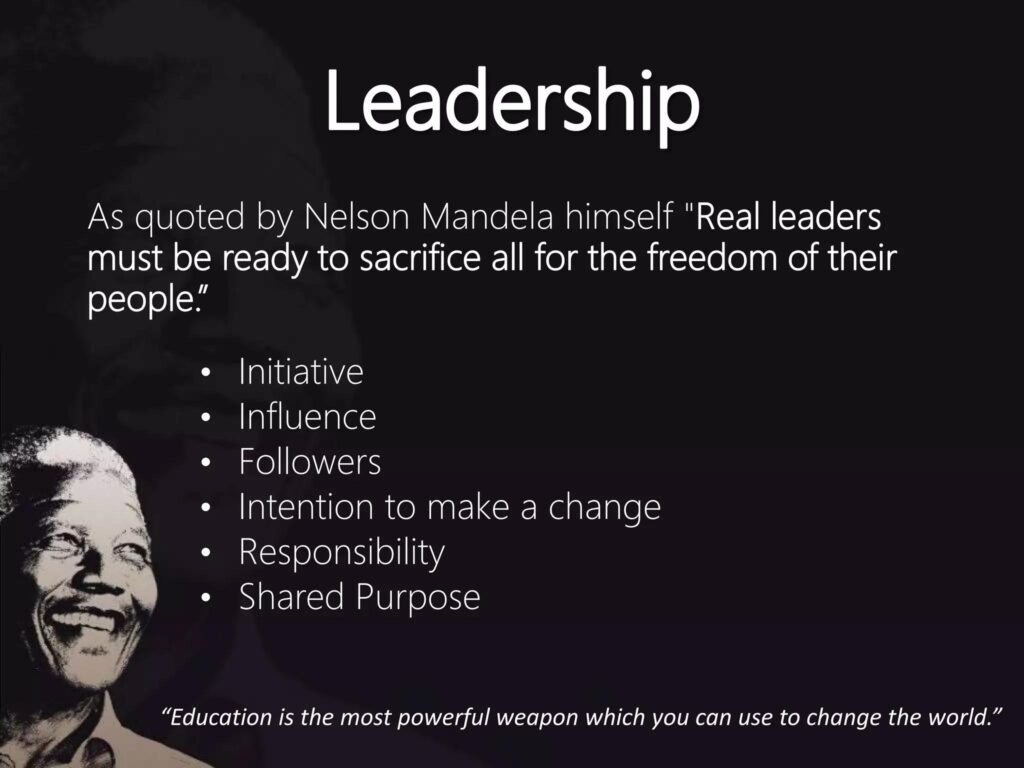
Mandela’s story is usually told as a story of resilience and forgiveness. Both are accurate. But what gets less attention is the extraordinary political sophistication he demonstrated at every stage of his life — before prison, during it, and after.
During his imprisonment, he studied Afrikaans — the language of his jailers — because he believed you couldn’t negotiate effectively with someone whose language and culture you didn’t understand. He used his time in prison to think, to read, to prepare for a political role he had no guarantee he would ever be able to play.
When he was released in 1990 and eventually became South Africa’s first democratically elected president in 1994, he made choices that were deeply uncomfortable to many of his own supporters — including bringing former apartheid officials into his government rather than prosecuting or excluding them.
What Mandela’s Choices Reveal
His decision to pursue reconciliation over retribution was not weakness. It was a calculated, long-term strategy for building a functional state out of a deeply broken one.
“This was never naivety on Mandela’s part. The reality was clear to him — vengeance would feel satisfying and lead directly to collapse. Taking the harder, less emotionally gratifying path wasn’t weakness; it was the option with the strongest chance of actually working.”
His life raises a question worth sitting with: how many of the conflicts in our own lives — personal, professional, civic — could benefit from more long-game thinking and less short-term emotional satisfaction?
Common Mistakes People Make When Studying Historical Figures
One mistake almost everyone makes is turning historical figures into either saints or villains. Real people are neither. Leonardo could be self-absorbed and unreliable. Mandela made political decisions that historians still debate. Tesla had significant personal difficulties and eccentric beliefs. Curie was single-minded to the point that it damaged her family relationships.
Flattening these people into simple heroes strips away the most useful part of their stories — the parts where they were confused, wrong, afraid, or inconsistent, and still moved forward anyway.
Another common mistake is reading their stories as confirmation that genius is innate. Most of what made these figures remarkable was not a fixed talent they were born with — it was an obsessive habit of attention, persistence through failure, and willingness to operate outside what their era considered acceptable.
A third mistake is treating history as a spectator sport rather than a curriculum. These lives are full of applicable lessons about strategy, courage, resilience, communication, and long-term thinking. Reading about them with a “what can I actually use here” mindset transforms them from interesting stories into genuinely useful guides.
How to Actually Learn From Historical Figures
Start with biographies rather than textbooks. Walter Isaacson’s biography of Leonardo da Vinci is one of the best reads I’ve come across — detailed, human, and completely engaging. Kate Clifford Larson’s biography of Harriet Tubman is essential. Long Walk to Freedom, Mandela’s own memoir, is deeply worth your time.
Use apps like Blinkist or Readwise if you want to absorb key ideas quickly, then go deeper on the figures who resonate most with you. Podcasts like Hardcore History by Dan Carlin bring historical moments to life in a way that textbooks rarely do.
The goal isn’t to memorize dates or facts. The goal is to understand how certain people thought, what drove their decisions, and how those decisions rippled outward across generations.
These Lives Are Still Speaking
The people covered here didn’t set out to change civilization. They set out to solve a problem, pursue an obsession, survive an injustice, or build something they believed in. Civilization-level change was the byproduct.
That reframe matters. Because it means the distance between an ordinary life and a historically significant one isn’t necessarily talent or luck or circumstance — sometimes it’s just the willingness to take your own convictions seriously enough to act on them, repeatedly, over a very long time.
History isn’t something that happened to other people in other centuries. It’s being made right now, by people who probably feel a lot like you and I do most days — uncertain, imperfect, and trying to figure out what the right move is.
The remarkable figures who changed civilization were all of those things too. They just kept going anyway.
TV Show Endings That Left Fans Speechless
The Night a TV Finale Made Me Call My Friend at Midnight
It was a Tuesday night, somewhere around 11 PM, when I finished the final episode of a show I had been watching for six years. My roommate had already gone to bed. The credits rolled. And I just sat there — completely still — staring at a black screen, trying to process what had just happened.

Not because it was bad. Not because it was good. Because it was so unexpected, so emotionally loaded, that my brain genuinely needed a few minutes to catch up.
That’s what the best TV finales do. They don’t just wrap up a story — they leave a mark. Some leave fans cheering. Others leave them furious. A rare few leave everyone absolutely speechless, arguing about what it all meant for years after the show ends.
If you’ve ever felt that specific mix of awe, confusion, and emotional whiplash after a finale, you already know what this piece is about. Let’s talk about the TV show endings that genuinely stopped people in their tracks — and why they hit the way they did.
What Makes a TV Finale Actually Work
Before diving into specific shows, it’s worth understanding why finales are so hard to get right. A series builds relationships between viewers and characters over months or years. By the time the finale arrives, audiences aren’t just watching a story end — they’re saying goodbye to people they feel like they genuinely know.
Get the ending wrong and the backlash is brutal. Get it right and people talk about it for decades.
The finales that leave fans speechless tend to share a few qualities: they honor the emotional truth of the characters, they surprise without feeling cheap, and they leave just enough open to interpretation that viewers keep thinking long after the screen goes dark.
The Sopranos — A Cut to Black That Broke the Internet Before Breaking the Internet Was a Thing
Airing in 2007, long before social media was the cultural force it is today, “The Sopranos” finale managed to generate the kind of instant, explosive reaction we now associate with Twitter meltdowns and Reddit threads.
Tony Soprano sits in a diner with his family. Journey’s “Don’t Stop Believin'” plays on the jukebox. A suspicious-looking man walks to the bathroom. Meadow parks outside. The bell above the door jingles. Tony looks up.
Cut to black. Silence. Credits.
Millions of viewers across the country thought their cable had gone out. Phone lines lit up. Forums exploded. People genuinely couldn’t tell if what they’d just watched was a masterpiece or a cheat.
Why That Ending Still Matters
Creator David Chase made a deliberate choice to end Tony’s story at the exact moment viewers expected resolution — and give them nothing instead. No death scene. No arrest. No redemption. Just an abrupt stop that mirrored the way real life actually ends: without warning, without a neat bow, without the closure we convince ourselves we deserve.
Over time, most fans and critics came around to understanding that the ambiguity was the point. Life in Tony’s world was always one moment away from ending violently. The finale put viewers directly inside that anxiety and refused to release it.
Rewatching that final scene after reading interviews with Chase and studying the episode’s visual language reveals layers of intentionality that make it even more impressive. The man at the counter. The angle of every shot. The song lyrics playing in the background.
Nothing was accidental. Everything meant something.
Breaking Bad — A Finale That Actually Satisfied Everyone
Here’s a genuinely rare thing in television history: a finale that satisfied almost every fan, critics included, and still left people emotionally wrecked.
Walter White’s story ended in 2013 with an episode called “Felina” — an anagram of “finale” and a reference to a Marty Robbins song playing through the episode. After five seasons of watching a chemistry teacher transform into a ruthless drug kingpin, viewers got exactly what the story demanded.
Walter admitted the truth — to himself and to his wife — that everything he did was for himself, not his family. He freed Jesse. He took down the neo-Nazis who had stolen his empire. And he died alone in a meth lab, bleeding out on the floor he loved more than the people in his life.
The Lesson Breaking Bad’s Finale Teaches Writers and Viewers
What showrunner Vince Gilligan understood was that a satisfying ending doesn’t mean a happy one. It means a true one. Every choice Walt made across five seasons pointed toward this specific conclusion. The finale didn’t subvert the story — it completed it with ruthless honesty.
Fans who had spent years debating whether Walt was secretly a hero got their definitive answer. Fans who wanted justice got it. Fans who loved Walt despite everything got to grieve him.
Gilligan later said the writers asked one question during every story decision: what does this character deserve? That question, applied consistently, is why Breaking Bad’s finale worked when so many others fail.
Game of Thrones — The Most Talked-About Disappointment in TV History
No list of speechless-inducing finales is complete without addressing the elephant in the room. Game of Thrones ended in 2019, and the reaction was so intense, so uniformly negative, that it sparked a petition signed by over a million fans demanding a remake of the final season.
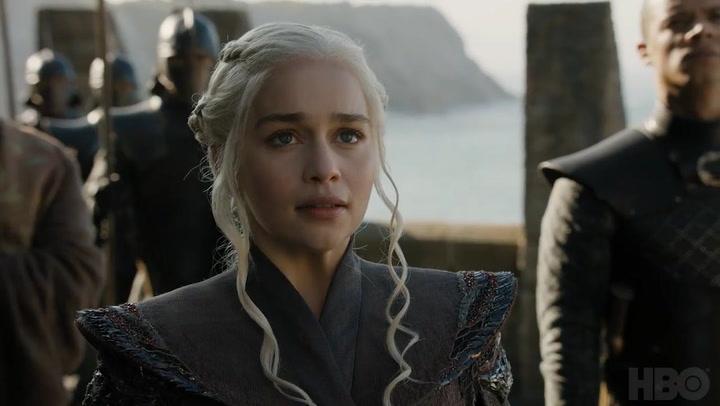
For seven seasons, the show was celebrated as a masterpiece — complex characters, unpredictable plotting, extraordinary production values. The final season, compressed into six episodes when the story arguably needed twelve, felt rushed in ways that undermined years of careful character development.
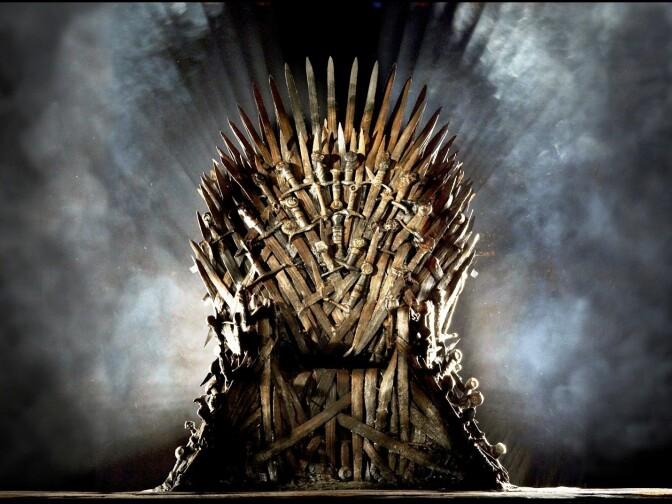
Daenerys Targaryen’s sudden turn to mass violence felt unearned to many viewers. Bran Stark becoming king read as anticlimactic to fans who had followed more emotionally compelling characters for eight years. Jon Snow’s arc ended in a way that felt purposeless rather than poignant.
What Game of Thrones Actually Got Wrong
The speechlessness fans experienced watching the Game of Thrones finale was a different kind entirely from The Sopranos or Breaking Bad. This wasn’t awe or productive ambiguity. This was the specific shock of watching something you loved fail to stick the landing in front of millions of people simultaneously.
The most instructive lesson from this finale is about pacing. Great storytelling requires time. Character transformation has to be earned across enough scenes that it feels inevitable rather than sudden. When production schedules and creative exhaustion compress a story that needs room to breathe, audiences feel the seams even if they can’t always articulate why.
Game of Thrones remains a masterclass in television for its peak years — and an equally valuable case study in what happens when ambition outpaces execution at the finish line.
Lost — An Ending That Divided Everyone, Forever
Few finales have generated as much debate, for as long, as Lost’s 2010 conclusion. After six seasons of mysterious islands, time travel, smoke monsters, and polar bears, fans were promised answers.

What they got was something more emotional than explanatory. The finale revealed that the “flash sideways” scenes throughout the final season were a kind of limbo — a space the characters created together to find each other before moving on. The island events were real. The characters lived their lives, died at various points, and eventually reunited in this shared space before collectively moving forward.
Some viewers found it profoundly moving — a love letter to the relationships that had defined the show. Others felt genuinely cheated, convinced the writers had abandoned the show’s mythology in favor of sentiment.
Why Lost’s Ending Is More Complicated Than People Remember
Rewatching the finale with a decade of perspective reveals that the emotional core lands beautifully. Jack dying on the island as the light returns, Vincent lying beside him, his eye closing — mirroring the very first shot of the series — is genuinely stunning television.
The problem was expectation management. Years of intricate mythology had trained viewers to expect answers that the show’s writers either couldn’t or chose not to provide. The finale delivered something real and human while leaving the puzzle unsolved, and different viewers weighted those outcomes very differently.
Lost’s ending teaches something important about the relationship between a show and its audience: the story you tell across a series shapes the ending people will accept. Promise mystery, deliver emotion, and you’ll always split the room.
The Wire — An Ending So Quiet It Hit Like a Freight Train
David Simon’s “The Wire” is regularly cited as one of the greatest television series ever made. Its 2008 finale took a completely different approach from almost everything else on this list — no dramatic confrontations, no shocking twists, no emotional speeches.
Instead, the finale showed the cycle beginning again. New faces stepping into the same roles. The same institutions grinding forward with the same failures. A new kid on the corner. A new journalist fudging a story. A new mayor compromising his ideals.
Quietly, methodically, the show argued that systems outlast individuals — that the city of Baltimore would continue long after any particular character’s arc concluded.
Why Quiet Endings Can Be the Most Devastating
Many fans found The Wire’s finale almost uncomfortably realistic. Nothing was solved. Nobody rode off into the sunset. The final montage of new characters filling old roles was simultaneously beautiful and heartbreaking — a visual thesis statement for everything the show had argued across five seasons.
Streaming platforms like HBO Max, where The Wire is available, have introduced entire new generations to the show, and most report the same experience: the ending doesn’t feel like an ending at all. It feels like looking out a window at something that was always happening and never stops.
That discomfort is the point. And it makes the finale unforgettable precisely because it refuses to comfort you.
Common Mistakes People Make When Judging TV Finales
Expecting resolution when ambiguity is the answer — not every story owes viewers a clean ending. Some of the most powerful conclusions deliberately leave space for interpretation because life rarely offers the closure we want.
Judging a finale in isolation from the series it concludes — a finale can only be understood in context. Breaking Bad’s ending works because of five seasons of specific storytelling. Removed from that context, it’s just a man dying in a building.
Confusing personal disappointment with objective failure — Game of Thrones disappointed millions, but some of that reaction was also grief. Fans had invested enormously in those characters and that world. Disappointment and failure aren’t always the same thing, even when they feel identical in the moment.
Rewatching too soon — giving a finale time before rewatching often reveals things that the initial emotional reaction obscured. Many fans who hated Lost’s ending on first viewing found it more moving on a second watch, once the anger about unanswered questions had settled.
How to Get More From TV Finales
Watch the pilot episode immediately after the finale. The contrast between who characters were at the beginning and who they became by the end is often where the real emotional payoff lives. Most great shows hide their thesis in the very first scene.
Read the showrunner interviews after watching. Creators like David Chase, Vince Gilligan, and David Simon have given extensive interviews about their intentions. Understanding what they were trying to do — even when you disagree with the execution — deepens the experience significantly.
Use platforms like Reddit’s television communities, where episode discussion threads preserve fan reactions in real time. Reading how people responded to a finale on the night it aired, compared to how they discuss it years later, reveals how much time and perspective change our relationship to storytelling.
The Endings That Stay With You
The TV finales that genuinely leave fans speechless — whether from awe, devastation, confusion, or a complicated mixture of all three — share one quality above everything else.
They make you feel something you weren’t fully prepared for.
Great television asks us to care about fictional people and then uses that care to show us something true about the world we actually live in. The best endings honor that relationship. They don’t just close a story — they reframe everything that came before it.
That’s why people still argue about Tony Soprano’s fate in diners seventeen years later. That’s why Breaking Bad’s final image of Walt’s hand touching the equipment he loved stays burned in the memory. That’s why the closing montage of The Wire makes people go quiet in a way that’s hard to explain but impossible to forget.
The screen goes dark. The credits roll. And something in you has shifted — just slightly, permanently — in a way only the best stories can manage.