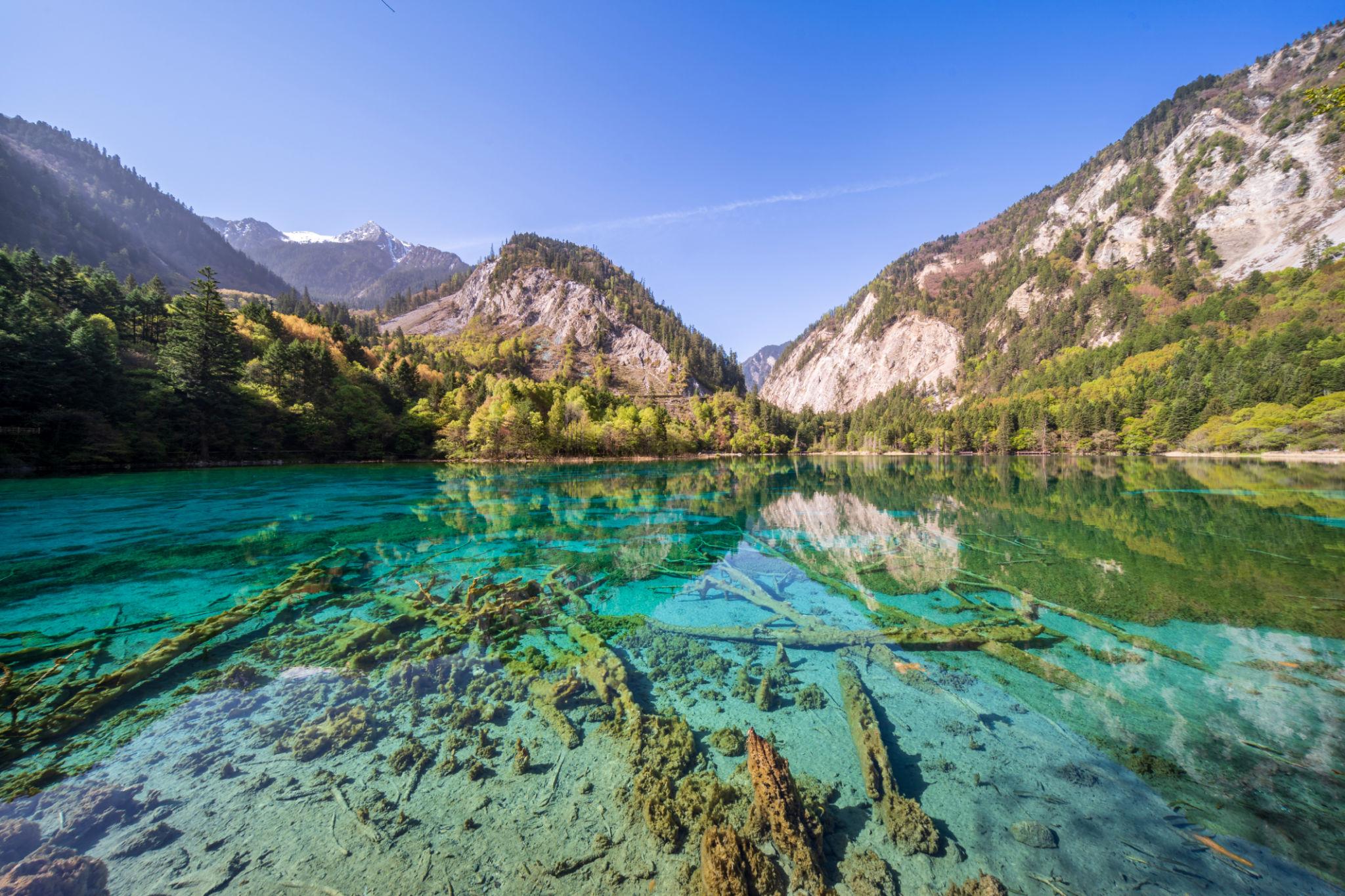

I was standing on a salt flat in Bolivia at sunrise. For about ten full seconds, I genuinely forgot I was still on Earth.
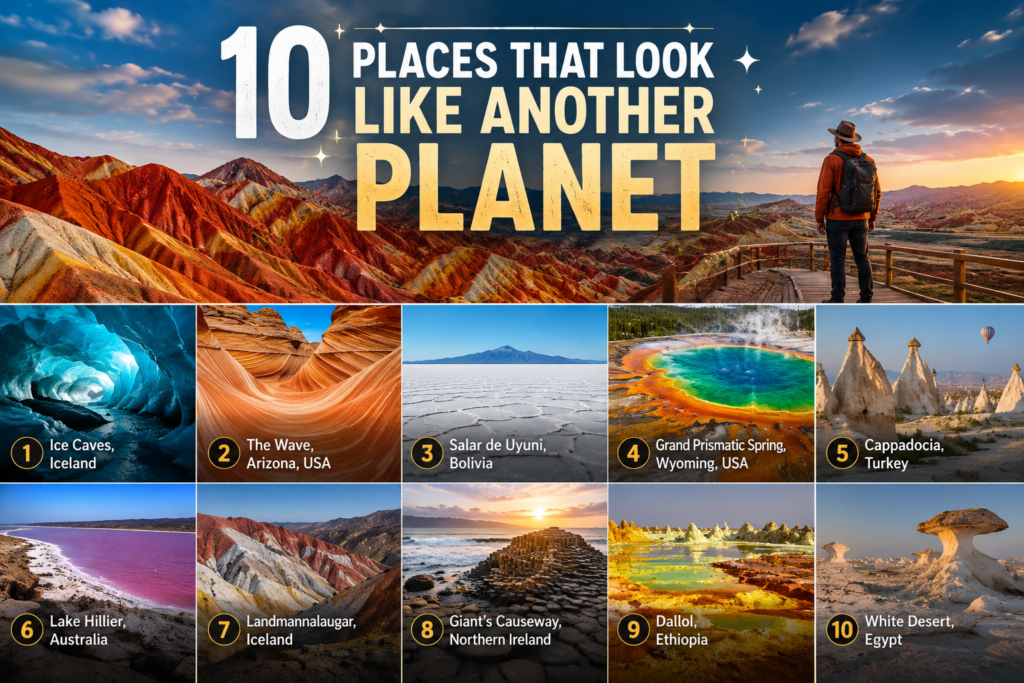
The ground stretched out white and cracked in every direction. The sky reflected perfectly on a thin layer of water. There was no horizon line anywhere I looked. My friend Dana turned to me and said, “I feel like we should be wearing space suits right now.” She wasn’t exaggerating.
That trip kicked off a weird little obsession for me. Over the last several years, I’ve chased down places that mess with your sense of reality. Spots where the ground, the color, or the whole landscape looks like it belongs in a sci-fi movie. Not on a map you can actually book a flight to.
Some of these I’ve been to myself. Others I’ve researched obsessively through travel forums, geologists’ blogs, and way too many hours on Google Earth. Planning a trip to a place that looks alien takes more effort than a normal vacation. Here’s everything I’ve learned, including a few mistakes that cost me time and money I didn’t need to lose.
Why These Places Look So Unearthly in the First Place
Before getting into the list, it helps to understand why certain landscapes end up looking like they belong on Mars or some far-off moon.
Most of these places share one thing in common: extreme geology. Volcanic activity, mineral deposits, salt formations, or unusual erosion patterns create textures and colors you won’t find on your average hiking trail. Add in isolation, meaning few plants, few animals, and almost no human development. You get landscapes that feel completely disconnected from anything familiar.
Understanding this actually helps with planning. Some places look alien because of extreme heat or altitude. Others look alien because of unusual color patterns from mineral deposits. Each type needs different prep. I learned this the hard way, more on that later.
1. Salar de Uyuni, Bolivia
This is the salt flat I mentioned earlier. It’s the largest one on the planet, covering more than 10,000 square kilometers.
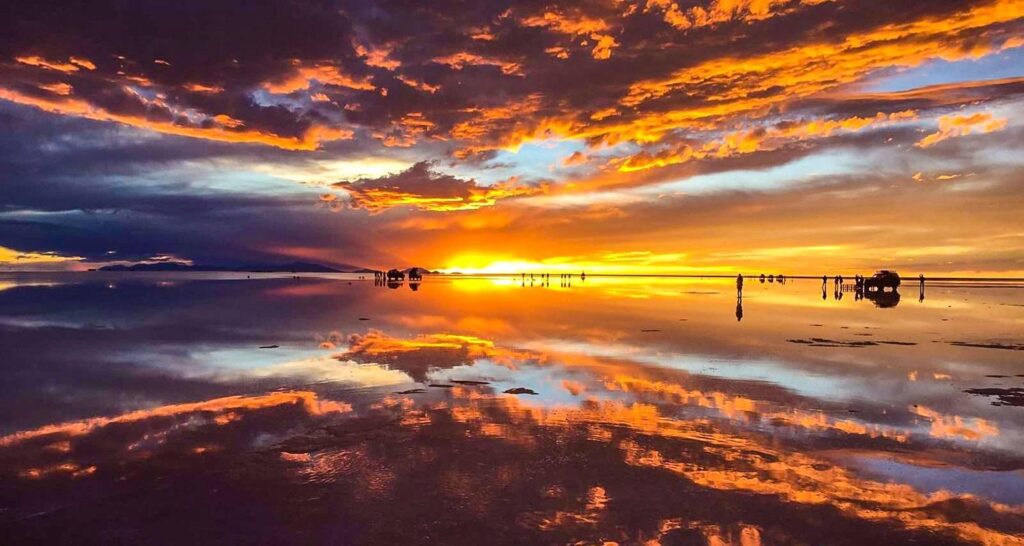
During the dry season, the ground cracks into massive hexagonal patterns that stretch endlessly. During the wet season, a thin layer of rainwater turns the entire flat into a mirror. That’s when you get those famous photos where it looks like people are walking on clouds.
Step-by-step if you’re planning this trip:
- Decide which season matters more to you. Dry season, roughly May to October, gives you the cracked earth look and easier driving conditions. Wet season, December through April, gives you the mirror effect but limits where vehicles can go.
- Book a tour from Uyuni town rather than trying to drive yourself. GPS doesn’t work reliably out there. There are no road markings across the flat.
- Bring sunglasses rated for high UV, and I mean actually rated, not just dark lenses. The reflection off the salt is brutal on your eyes.
- Pack layers. Mornings and nights get shockingly cold even though you’re near the equator, because of the altitude.
My mistake here was showing up in October, thinking I’d get lucky with a bit of rain. I didn’t. The flat was fully dry. Still stunning, but not what I’d planned my whole trip around. Check recent conditions on forums like TripAdvisor’s Bolivia board before locking in dates.
2. Danakil Depression, Ethiopia
This is genuinely one of the harshest environments I’ve ever read about. I say “read about” because I haven’t made it there myself yet. It’s on my list for next year.
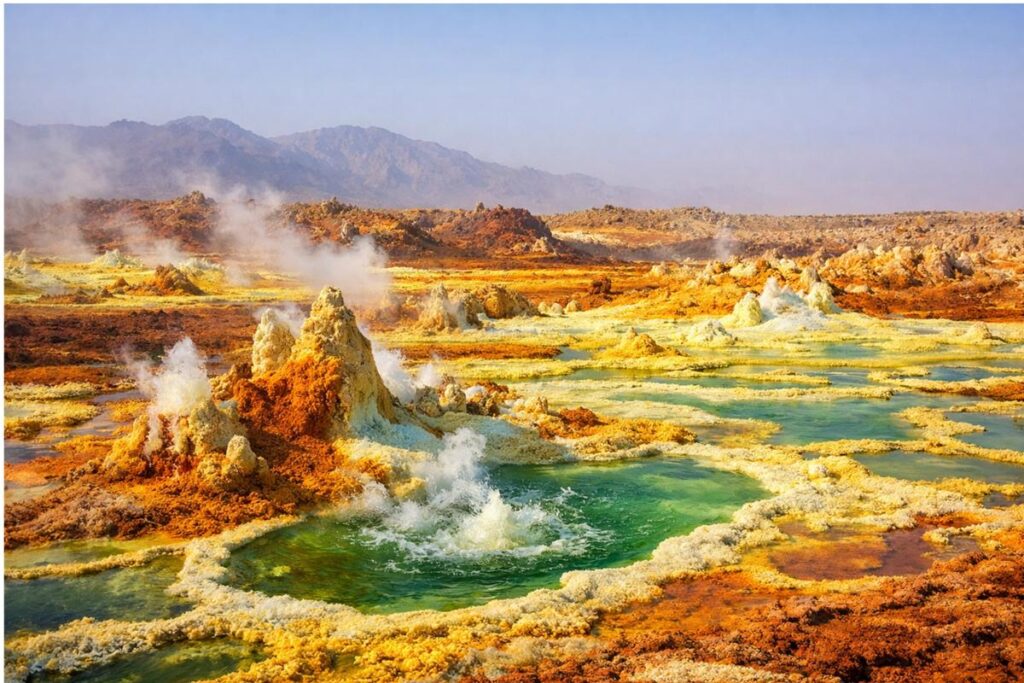
The Danakil Depression sits below sea level and regularly hits temperatures over 120°F. It’s home to sulfur springs in shades of yellow, green, and orange. They look like something straight out of a chemistry experiment gone sideways. There’s also an active lava lake at Erta Ale volcano.
Photos from people who’ve visited show bubbling acid pools and mineral formations that genuinely look painted on. Locals actually mine salt here by hand. That adds a strange human element to an otherwise completely inhospitable landscape.
If you’re considering this trip, guided tours through operators based in Mekele are essentially mandatory. Safety is one reason. The region also requires permits due to its proximity to sensitive border areas.
3. Fly Geyser, Nevada
This one is almost embarrassingly easy to get to compared to the others on this list. Yet most people have never heard of it.
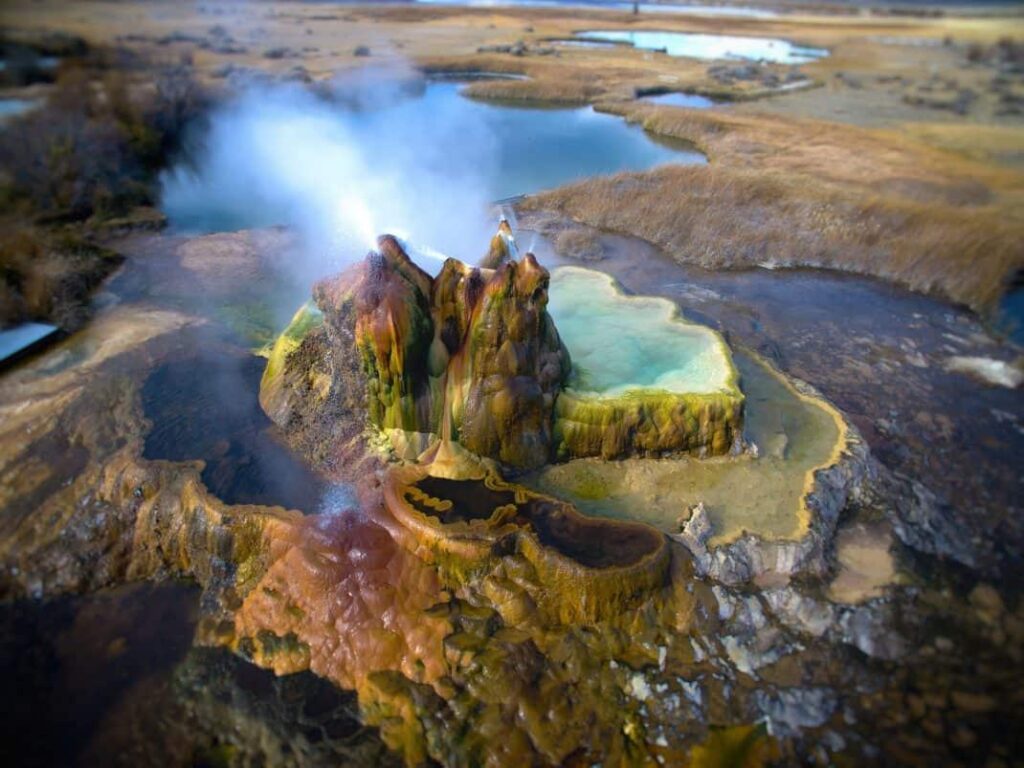
Fly Geyser sits on private land in the Nevada desert. It’s a small mound covered in vivid green and red algae, constantly spraying water like an alien fountain. It wasn’t even natural in the traditional sense. It formed accidentally from a geothermal well drilled back in 1964 that was never properly capped.
I visited during a road trip through Nevada, and honestly, it took some effort. Access is controlled by the Fly Ranch nature preserve. You can only see it through scheduled tours or from a designated viewpoint along Highway 34. Don’t trespass onto the private ranch property, no matter what old blog posts say about sneaking in. That land is actively monitored now.
4. Zhangye Danxia Landform, China
Picture rolling hills striped in red, orange, yellow, and green. Like someone took a paintbrush to an entire mountain range. That’s Zhangye Danxia in Gansu Province.
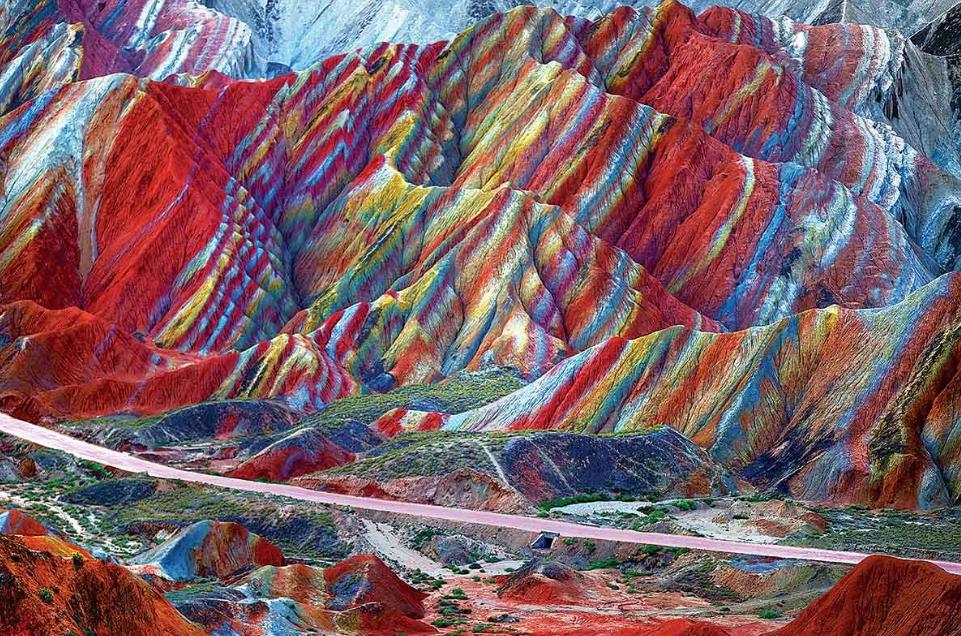
The colors come from layers of sandstone and mineral deposits compressed over millions of years. Tectonic activity pushed them upward, and erosion shaped the rest.
A friend of mine visited during golden hour, right before sunset. She said the colors practically glow at that time of day. Wooden walkways and viewing platforms now exist specifically for tourists, which makes this one far more accessible than most entries on this list. Just know it gets crowded, especially during Chinese national holidays. Weekday visits are your best bet if you want fewer people in your photos.
5. Socotra Island, Yemen
Socotra looks like something out of a Tim Burton fever dream, mostly because of the Dragon’s Blood Trees. These umbrella-shaped trees have a dense, upside-down canopy structure that genuinely doesn’t resemble any tree most people have ever seen.
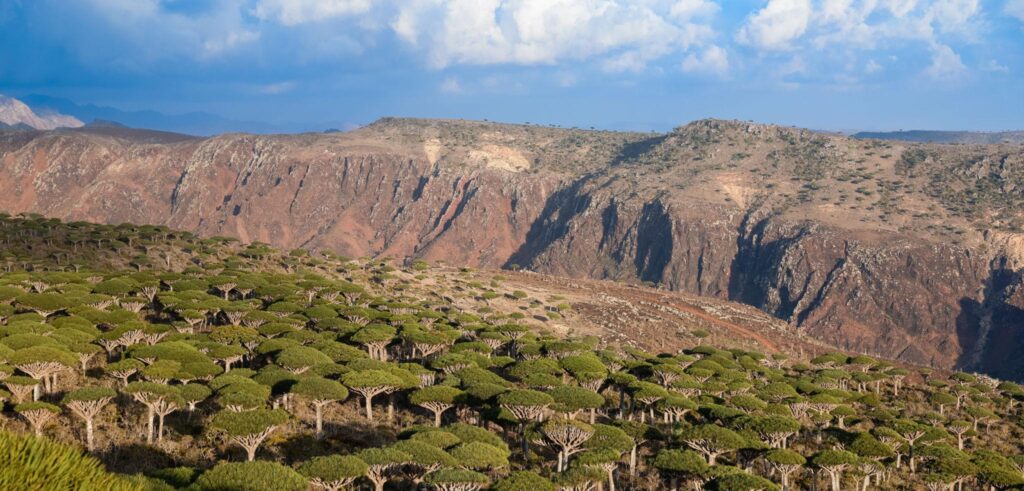
The island stayed isolated from mainland Africa and Asia for millions of years. That isolation led to roughly a third of its plant species existing nowhere else on Earth.
I’ll be upfront here. Yemen’s ongoing instability makes travel genuinely difficult and risky right now. Socotra itself has generally remained safer than the mainland. Still, getting current, reliable travel advisories before considering this trip matters more here than almost anywhere else on this list. Check your government’s official travel advisory site rather than relying on outdated blog posts.
6. Pamukkale, Turkey
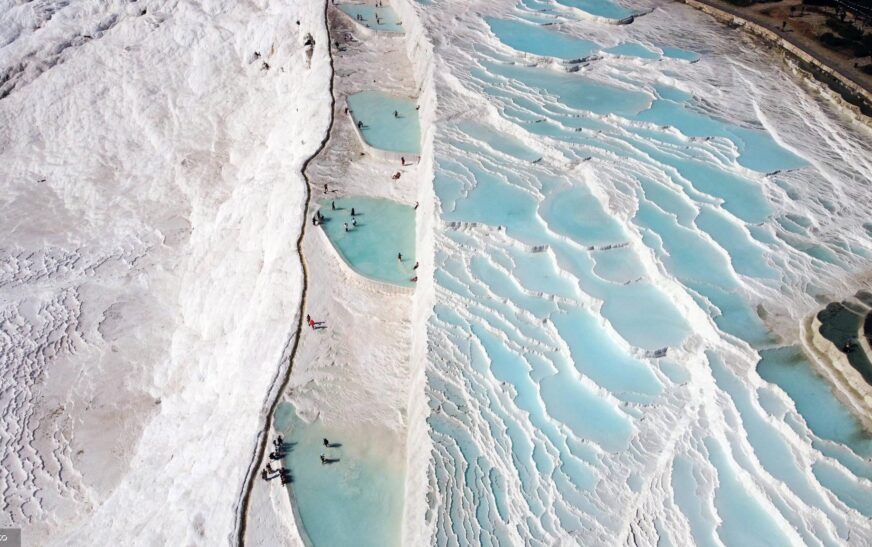
Pamukkale translates to “cotton castle.” Once you see photos, you’ll understand why.
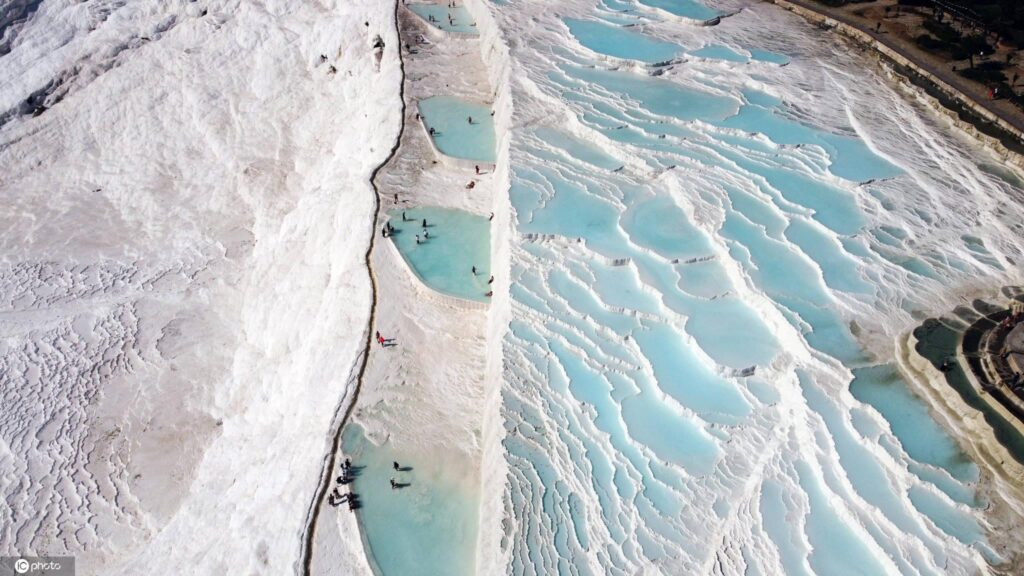
Terraced pools of mineral-rich water cascade down a hillside. Calcium deposits have built up over thousands of years into bright white, almost snow-like formations. Some pools are warm enough to wade in.
I visited this one myself a few years back, and honestly, I underestimated how slippery the terraces get. Wear water shoes with actual grip, not flip-flops. I watched at least three people slip within twenty minutes of arriving, myself almost included.
Also worth knowing: certain sections are now closed to walking. This protects the formations from erosion caused by tourist foot traffic. Stick to the designated paths, both for the site’s preservation and because rangers do enforce this.
7. Lake Hillier, Australia
This lake sits on Middle Island off the coast of Western Australia. It’s genuinely bubblegum pink, like someone dumped food coloring into it.
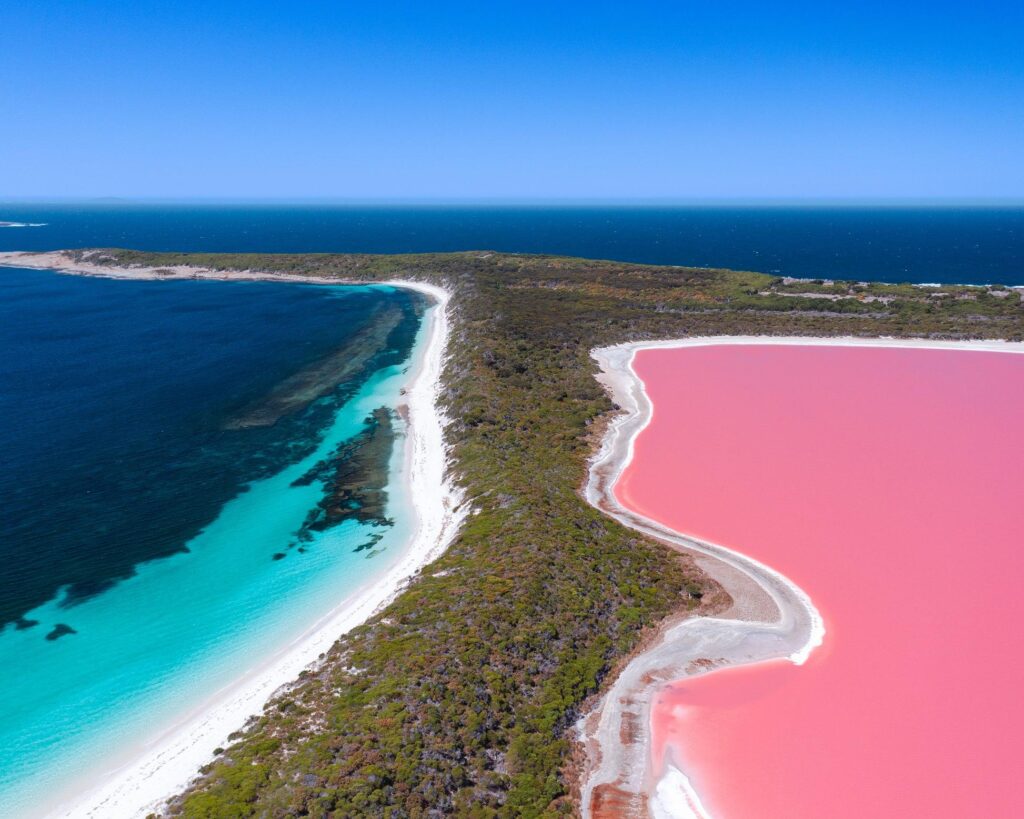
Scientists believe the color comes from a combination of algae, specifically Dunaliella salina, and high salt concentration. The exact mechanism is still debated among researchers.
Here’s the catch. You can’t actually swim in it or get close on foot easily, since the island itself has restricted access. Most people see it from scenic flights departing from Esperance. I’ve talked to a couple of travelers who did this flight. They said it’s worth every dollar, even though it’s not cheap, because photos genuinely don’t do the color justice in person.
8. Spotted Lake, Canada
British Columbia’s Spotted Lake, known locally as Kliluk, is covered in hundreds of circular mineral pools. They appear during summer when the water evaporates, leaving behind deposits of magnesium sulfate, calcium, and other minerals.
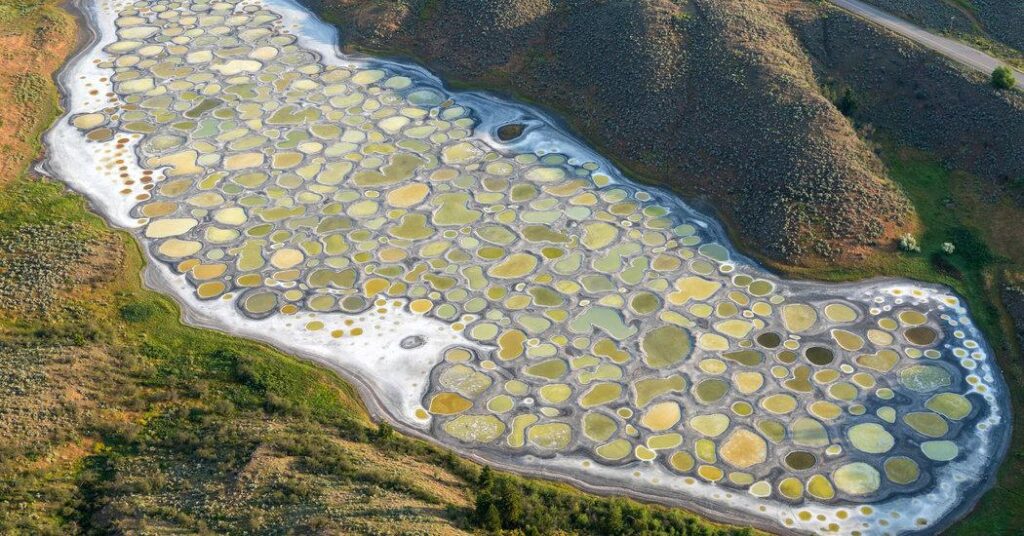
Each pool ends up a slightly different color depending on its mineral concentration. That creates a polka-dot pattern across the entire lake bed, one that looks almost too geometric to be natural.
This land is sacred to the Okanagan Nation and has deep cultural significance, so it’s fenced off from public entry. You view it from a roadside pull-off along Highway 3, which honestly gives you a great vantage point anyway. Respect the fencing here. This isn’t a spot to hop a barrier for a better photo.
9. Ijen Crater, Indonesia
Ijen Crater in East Java is famous for two things. There’s a bright turquoise acidic lake, and electric blue flames that appear at night, caused by burning sulfuric gases.
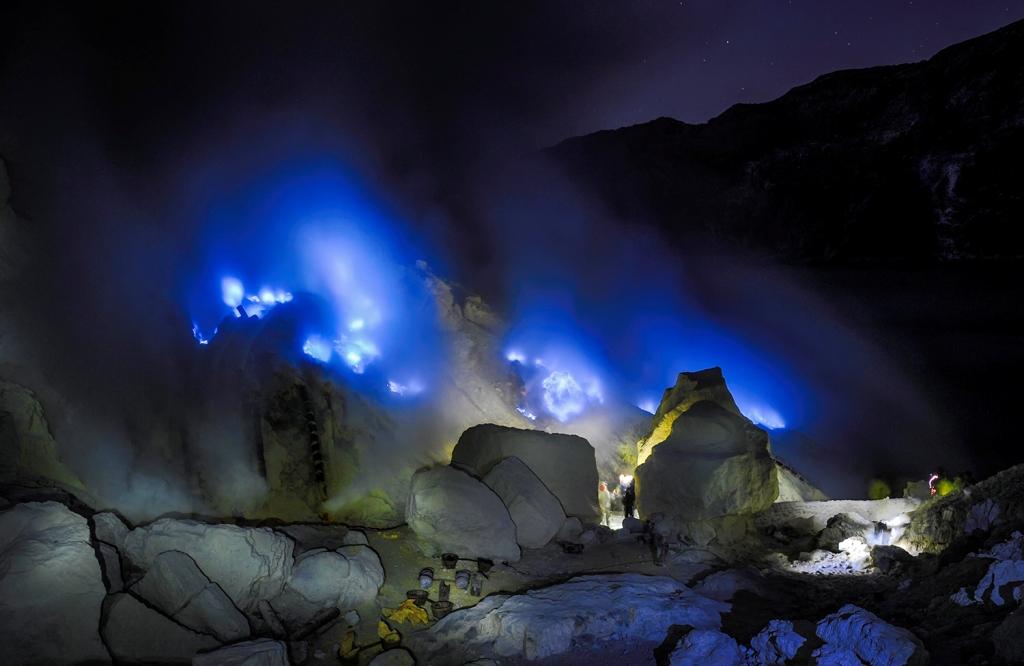
Miners actually work this crater by hand, extracting sulfur in brutal conditions. Some haul loads weighing over 150 pounds down steep, rocky paths. Seeing this firsthand puts the whole “alien landscape” idea into a heavier perspective. It’s beautiful, but it’s also someone’s genuinely dangerous workplace.
If you want to see the blue flames, plan to start hiking around midnight, since they’re only visible in complete darkness. Bring a proper gas mask, not a cheap paper one, since sulfur fumes here can genuinely hurt your lungs. Local tour operators in Banyuwangi typically rent these out as part of guided packages.
10. Wadi Rum, Jordan
Also called the Valley of the Moon, Wadi Rum earned its nickname honestly. Several Mars movies, including “The Martian,” were actually filmed here. The red sand and towering sandstone cliffs look almost exactly like NASA’s photos from the actual Mars surface.
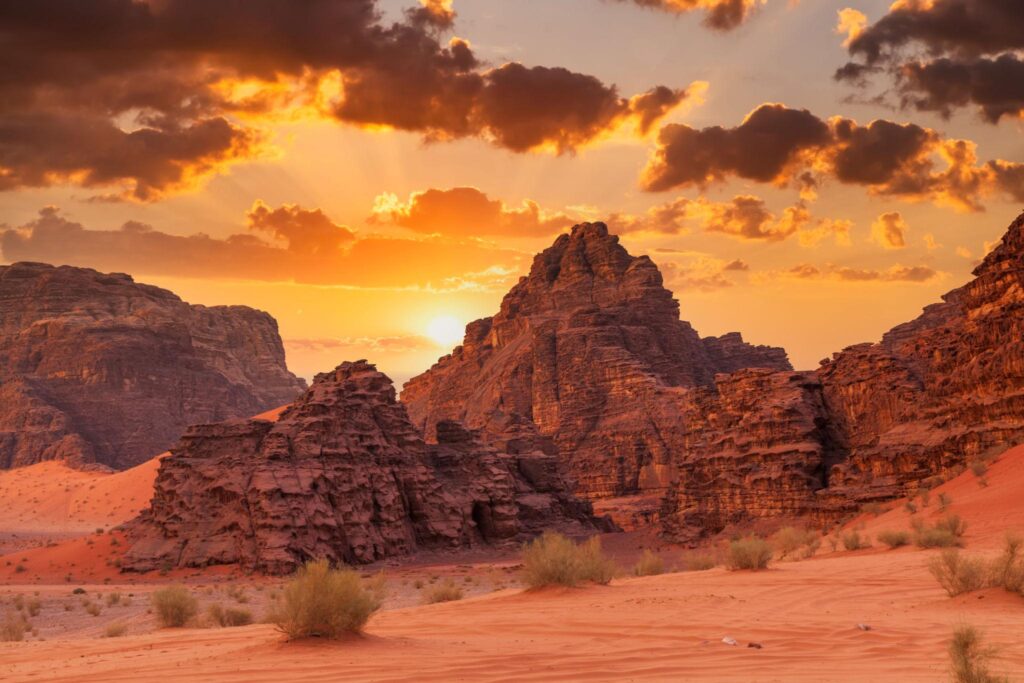
I spent a night here in a Bedouin-style desert camp. Waking up to that reddish landscape at sunrise, with almost total silence around me, was one of those travel moments I still think about randomly.
A few practical tips if you go:
- Book a Bedouin-guided jeep tour rather than trying to explore independently. The terrain is disorienting, and getting lost in the desert isn’t a small risk.
- Stay overnight in one of the desert camps if you can swing it. Daytime is beautiful, but nighttime, with zero light pollution, is where this place truly earns its reputation.
- Bring more water than you think you need. The dry heat dehydrates you faster than you’d expect.
Common Mistakes People Make Chasing These Destinations
After years of researching and visiting places like these, a few patterns keep showing up. I’ve seen them in my own trips and in stories from other travelers.
Underestimating the physical demands. Extreme heat, high altitude, and remote locations mean these trips often require more physical preparation than a typical vacation. Check elevation and climate details before you go, not after you’re already struggling to breathe at 12,000 feet.
Trusting outdated photos and blog posts. Many of these places change access rules, seasonal conditions, or even physical appearance over time due to erosion or conservation efforts. Always check recent reviews from the last few months, not articles from five years ago.
Ignoring local guides to save money. Several of these locations are genuinely dangerous without proper guidance. Toxic gases, unstable terrain, and the risk of getting lost are all real concerns. The money you save skipping a guide isn’t worth the risk.
Forgetting about protected status. A handful of these places restrict access specifically because of past damage caused by tourists. Respecting barriers and marked paths isn’t just about rules. It’s about making sure these places still look this way for the next person who visits.
Packing for the destination’s reputation instead of its reality. A place with an otherworldly look often has genuinely harsh conditions to match. Research actual weather and terrain conditions. Don’t assume a “cool desert photo” means casual sneakers and a light jacket will cut it.
Final Thoughts
Chasing these landscapes taught me something I didn’t expect going in. The places that look the least like Earth often require the most respect for the actual, very Earthly rules that protect them. That includes cultural significance, environmental fragility, and plain physical danger.
None of these trips are casual weekend getaways. Honestly, that’s part of what makes them worth it. When you finally stand somewhere that doesn’t look real, after all the planning it took to get there, it hits differently than checking a box on a tourist trail.
If even one of these ends up on your travel list, do the research. Hire the local guides. Go in prepared. These places have survived millions of years of geological chaos to look this way. The least we can do is show up ready to actually appreciate them.