


I still remember standing in that village in Cambodia, paintbrush in hand, feeling completely useless.
It was 2016. I had paid nearly three thousand dollars for a two-week voluntourism trip through a well-known organization. The brochure showed smiling volunteers building schools and changing lives. The reality was different.

We arrived at a school that already had perfectly good walls. The local builders watched us repaint them. They had painted them themselves just six months earlier. We were undoing their work and calling it help.
The children performed a dance for us on our first day. They had clearly done it many times before. Their smiles looked rehearsed. I later learned that this school received multiple volunteer groups every month. Each group painted the same walls. Each group took the same photos. groups left feeling like they had made a difference.
I did not feel like I had made a difference. I felt like I had participated in something performative.
That experience sent me down a rabbit hole of research and uncomfortable questions. What I found changed how I think about travel, helping, and what actually constitutes meaningful action.
The Business of Good Intentions
Voluntourism is massive. The global market was valued at nearly 874 million dollars in 2024 and is projected to reach 1.2 billion by 2030. Around ten million people participate in volunteer tourism each year. More than eight hundred international organizations across 151 countries facilitate these trips.
Most volunteers come from wealthy countries in the Global North and travel to poorer countries in the Global South. The average fee for a one-month volunteer program ranges from two thousand to five thousand dollars.
That is a lot of money flowing into an industry that, at its worst, does more harm than good.
The Dependency Problem Nobody Wants to Discuss
Here is the uncomfortable truth that voluntourism organizations rarely mention. When communities become reliant on a constant stream of foreign volunteers, they stop developing their own capacity to solve problems.
Local organizations learn to cater to volunteer expectations rather than community needs. They create projects specifically designed to attract paying volunteers. These projects may have little to do with what the community actually requires.
One study examining voluntourism impacts found that it can perpetuate dependency, cultural insensitivity, and neocolonial narratives. Critics argue that voluntourism reinforces unequal power relations between tourists and hosts. The practice economically disenfranchises local communities and creates relationships dependent on aid reliance.
Think about what that means. A community that could be developing its own teachers, builders, and healthcare workers instead becomes dependent on a rotating cast of unskilled foreigners who stay for two weeks and leave.
What Creates This Dependency?
Several factors contribute to the dependency problem in voluntourism.
Financial reliance is the most obvious factor. When communities receive regular income from volunteer organizations, they become reluctant to change the model. The money becomes too important. Local leaders may feel they cannot afford to tell volunteers the truth about what is really needed.
Skill erosion happens when communities stop solving their own problems. Why train local builders when foreign volunteers will build things for free? Why develop local teaching capacity when English-speaking volunteers arrive every month? Over time, the community loses skills it once had.
Psychological dependency is less visible but equally damaging. Communities can internalize the idea that they cannot succeed without outside help. This undermines confidence and agency. It tells people they are not capable of solving their own problems.
The Orphanage Industrial Complex
Orphanage tourism is perhaps the most disturbing manifestation of voluntourism’s dark side.

Almost eighty percent of children in long-term residential institutions are not orphans at all. Most have at least one living parent. Poverty drives families to place children in these institutions. The demand from volunteer tourists and the money they bring keeps these places open.
Unskilled visitors are placed in sensitive roles in orphanages and schools without proper background checks or child safeguarding policies. These practices sustain harmful institutional care models. They create unstable attachments for children who have already experienced trauma. In some cases, they even provide opportunities for offenders to access and exploit vulnerable children.
The UN Special Rapporteur on the Sale and Sexual Exploitation of Children has called for urgent regulation of this industry.
I think about that every time I see a photo of a smiling Western volunteer holding a child in an orphanage. That image, shared on social media for likes, often represents a system that harms the very children it claims to help.
Why Orphanage Volunteering Is Especially Harmful
Institutional care itself is damaging for children. Research consistently shows that children raised in institutions experience worse outcomes than those raised in families. They struggle with attachment, emotional regulation, and social skills.
The volunteer-child relationship is inherently unequal. Volunteers stay for a short time, form emotional bonds, and leave. Children experience loss repeatedly. They learn that adults come and go. This is traumatic.
Volunteer presence can delay family reunification. Institutions that receive volunteer income have less incentive to reunite children with their families. The business model depends on keeping children in care.
Background checks are often inadequate. Children in these settings are vulnerable. They are at increased risk of abuse. Unscreened volunteers can cause real harm.
The Skill Mismatch Problem
Here is something I learned the hard way. Being a decent person with good intentions does not qualify you to build a school, teach English, or provide medical care.
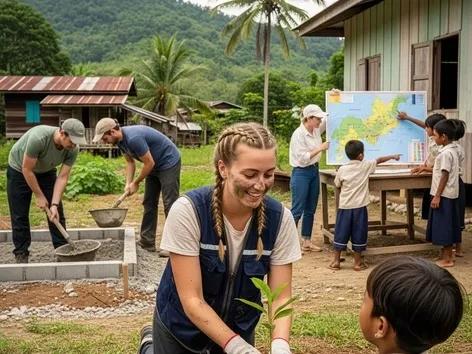
Volunteers often arrive with little to no development or humanitarian experience. They may not possess formal training in the areas where they are placed. Unskilled volunteers participating in construction projects without proper training can produce structures that are unsafe or unfit for long-term use.
A Singaporean volunteer named Hazel Teo described her experience in Laos. She and her peers planned to build bookshelves and a water filtration system. Once they gathered materials, the locals told them, “It’s okay, we can do it.” The locals were much faster. They ended up teaching the volunteers how to build things.
Hazel’s reflection was honest: “Why were we – people who have barely built anything in our lives – trying to help them build a bookshelf from scratch? It just felt a bit redundant.”
This is not an isolated experience. Researchers have noted that voluntourism projects may have little impact on communities because volunteers lack sufficient knowledge and skills.
Common Skill Mismatch Scenarios
Teaching English without training is one of the most common scenarios. Teaching a language requires specific skills. Volunteers often lack these skills. They may reinforce incorrect grammar or use inappropriate teaching methods.
Construction without building experience is another frequent problem. Volunteers may not know how to work safely or effectively. The resulting structures may be of poor quality. They may even be dangerous.
Medical volunteering without credentials is perhaps the most dangerous. Unqualified volunteers should never provide medical care. This violates professional ethics and puts patients at risk.
The Savior Complex and Its Consequences
There is a term for what drives much of the voluntourism industry: the white savior industrial complex.
Teju Cole coined this phrase to describe the tendency of Westerners to seek “a big emotional experience that validates privilege”. He wrote that “the white savior supports brutal policies in the morning, founds charities in the afternoon and receives awards in the evening”.
This critique is not about attacking individuals with good intentions. It is about examining a system where the needs of the helper often take priority over the needs of the helped.
Voluntourism can inadvertently reinforce the notion that communities cannot solve their own problems without outside intervention. It perpetuates what scholars describe as extractivist neocolonial structures. It turns poverty into a backdrop for personal growth narratives.
When I look back at my own photos from Cambodia, I see myself performing a role. I was the helper. They were the helped. That dynamic felt natural at the time. Now it makes me uncomfortable.
Signs You Might Be Operating from a Savior Complex
You feel like you are saving people. This is the most obvious sign. If your narrative is about rescue, something is wrong. Communities are not waiting to be saved. They are managing their own lives.
You take photos of yourself with locals. Especially posed photos that show you helping. These photos often communicate a power dynamic. Consider who benefits from the image.
You assume you know what is best. If you are not asking what the community wants, you are imposing your own ideas. This is not helping. This is colonizing.
You dismiss local knowledge. People in the community know their context better than you do. If you are not learning from them, you are not really helping.
When Voluntourism Actually Works
I want to be fair here. Not all voluntourism is bad.
Some programs do create genuine value. When I worked on a climate change research project in Ecuador, the scientists were able to run more research with help from volunteer labor. The volunteers had relevant skills. The work was part of a longer-term research program.
In some cases, volunteer tourism can make important contributions to ecosystem research and conservation, particularly in under-resourced regions.
The key difference is whether the program is designed around community needs or volunteer desires. Is it locally led? Does it fill a genuine gap? Does it build local capacity rather than replacing it?
Characteristics of Ethical Voluntourism Programs
Local leadership is the most important characteristic. The community should be in control. They should identify what they need and how volunteers can help.
Skill-appropriate work matters. Volunteers should do things they are actually qualified to do. Unskilled volunteers should do unskilled work.
Long-term commitment is essential. One-off trips are rarely effective. Programs with ongoing relationships and follow-up are more likely to create lasting change.
Transparency about impact is non-negotiable. Ethical organizations are honest about what they achieve and what they fail to achieve. They invite evaluation and criticism.
How to Volunteer Abroad Without Causing Harm
If you want to volunteer abroad, here is what I have learned about doing it ethically.
Step One: Examine Your Motivations
Why do you want to volunteer abroad? Be honest with yourself.
Are you seeking personal growth? That is valid, but it should not be the primary focus. Are you trying to escape something in your own life? That is a red flag. Are you genuinely committed to helping others? That is where to start.
Your motivation matters because it shapes your behavior. If you are there to feel good about yourself, you will make different choices than if you are there to serve.
Step Two: Research Organizations Thoroughly
Do not trust the brochure. Dig deeper.
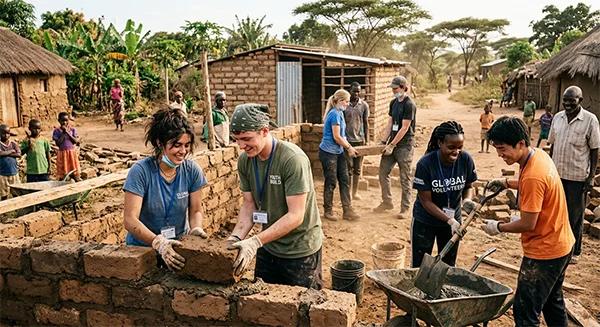
Look for programs that share leadership with local communities. Ethical volunteering means giving local people a seat at the table and a leading voice in the process. Avoid programs that exploit wildlife or children.
Ask tough questions. How much of the fee goes to the community? How much goes to overhead and marketing? What is the organization’s track record? Can they point to measurable outcomes?
Check reviews and third-party evaluations. Organizations like Better World and Global Giving provide information about ethical volunteer programs.
Step Three: Consider the Long-Term Impact
Ask whether the project will continue after you leave. Short-term volunteering can be valuable, but long-term engagement often leads to greater impact. Repeat visits or partnerships with local organizations can strengthen continuity and sustainability.
Does the project build local capacity? Or does it replace local workers? If the goal is to reduce dependency, the work should empower communities to solve their own problems.
Step Four: Match Your Skills to Real Needs
Do not volunteer for something you are not qualified to do.
Professional volunteering involves structured programs where skilled experts address specific challenges. If you are not a teacher, do not teach. you are not a builder, do not build.
If you do not have specialized skills, consider roles that do not require them. Administrative work, fundraising, and research assistance can be valuable without requiring specific credentials.
Step Five: Go to Learn, Not to Help
This shifts the entire dynamic.
When you approach a community as a learner rather than a savior, you are more likely to listen, respect local knowledge, and avoid imposing your own assumptions. You become a partner rather than a patron.
This mindset changes everything. It changes how you ask questions, how you respond to feedback. It changes how you measure success.
Step Six: Avoid Orphanage Volunteering Entirely
Organizations like Save the Children and ECPAT strongly advise against orphanage volunteering. Instead, look for opportunities that support families and help keep children in their communities.
There are many ways to support vulnerable children that do not involve direct contact in institutional settings. Support family reunification programs. Fund community-based care. Advocate for policy change.
Step Seven: Consider Alternatives to Voluntourism
Community-based tourism puts local people in control. You can stay in locally owned accommodations, eat at local restaurants, and participate in cultural experiences designed by the community. The money stays in the local economy. No one pretends you are saving anyone.
WWOOFing is another option. You exchange labor on organic farms for accommodation and meals. The work is actual work. The relationships are more equal.
Fair trade tourism is growing. These programs emphasize ethical engagement and economic justice. They prioritize local ownership and fair compensation.
What Real Help Looks Like
Here is something I wish someone had told me before that trip to Cambodia.
The most helpful thing you can do is often the least glamorous.
Send Money Directly
Support locally led organizations. They know what they need better than you do. They will spend it more efficiently than any volunteer program.
Do your research. Find organizations led by people from the community. Look for transparency about spending and impact.
Support Fair Trade Businesses
Buy products made by local artisans at fair prices. This creates sustainable livelihoods without creating dependency.
Look for fair trade certifications. Research who is behind the business. Are local people in leadership positions?
Advocate for Policy Change
Address the root causes of poverty. This is less satisfying than a photo of you holding a child. It is also more effective.
Support policies that address economic inequality, climate change, and global justice. Contact your representatives. Join advocacy organizations. Use your voice.

Listen and Amplify
Listen to people from the communities you want to help. Amplify their voices instead of speaking for them.
Read books by authors from the Global South. Follow activists on social media. Share their work. Elevate their perspectives.
Common Mistakes to Avoid
Assuming all voluntourism is good. It is not. Many programs cause real harm.
Choosing a program based on Instagram appeal. The most photogenic activities are often the most problematic.
Ignoring local perspectives. If community members are telling you something is not working, believe them.
Overstaying your welcome. Sometimes the best thing you can do is leave and let local people take over.
Failing to follow up. If you really care, stay in touch. Support the project after you return home.
My Final Thoughts
I do not regret that trip to Cambodia. It taught me something valuable and good intentions are not enough. It taught me that helping can sometimes be harmful.
What I regret is not doing my research beforehand. I regret assuming that because an organization was well-known, it was ethical. I regret not asking harder questions about who actually benefited from my presence.
The voluntourism industry is not going away. It is growing. But we can choose to participate differently. We can demand better from the organizations we pay so be honest about our motivations. We can prioritize the needs of communities over our own desire for a meaningful travel experience.
The question is not whether voluntourism can ever help. It can, in the right circumstances. The question is whether we are willing to do the uncomfortable work of figuring out what those circumstances actually are.
Sometimes the most helpful thing we can do is stay home, send money, and listen.
The Evening Unwind: Creating a Night Routine That Actually Works
For years, I treated bedtime like a race. I would scroll through my phone until my eyes burned, brush my teeth in a rush, and collapse into bed with my mind still racing through everything I had not accomplished that day. Then I would lie there, staring at the ceiling, watching the clock tick past midnight, then one in the morning, then two. My brain refused to shut off.
I told myself I was just a night person. Some people are wired for late nights, I reasoned. But the next morning always felt like punishment. I would drag myself through the day, drink too much coffee, crash in the afternoon, and then repeat the same cycle again. It was exhausting, and I had no idea how to break it.
What changed everything was not a magic pill or some complicated sleep hack. It was realizing that the way I ended my day was the problem. I was treating sleep like an interruption to my evening rather than the whole point of it. Once I started thinking of my nighttime hours as preparation for rest rather than resistance to it, everything shifted.
Here is what I actually learned about building a night routine that works. Not the idealized version you see on social media with candles and journaling every night. The real version that fits into a messy, unpredictable life and actually helps you sleep.
Why Most Night Routines Fail
The first thing I had to accept was that I had tried night routines before and failed because I was doing it wrong.
I would see posts online about elaborate evening rituals. People would talk about taking hour-long baths, meditating for thirty minutes, journaling, reading, and stretching. It looked beautiful and peaceful. I would try to copy it, feel overwhelmed, skip most of it, and go back to my usual routine of phone scrolling and frustration.
The problem was not me. The problem was thinking that a night routine has to be elaborate to work. It does not. A good night routine is simple enough that you actually do it, even on your worst days.
Another reason routines fail is timing. People start their wind-down too late. They stay engaged with work, screens, or social interaction until the last possible minute and then expect their brain to switch off instantly. That is not how human biology works. Your brain needs time to transition from high stimulation to low stimulation.
The third reason is inconsistency. Your body craves predictability. When you go to bed at different times every night and do different things before sleep, your brain does not get the cues it needs to wind down. A routine works because it signals to your nervous system that sleep is coming. If you change it every night, the signal gets confused.
The Science Behind Why Evening Habits Matter
Before I dive into the practical stuff, let me share something that helped me take this seriously.
Your body operates on a circadian rhythm, an internal clock that regulates when you feel alert and when you feel sleepy. This rhythm responds to environmental cues, especially light. When the sun goes down, your brain starts producing melatonin, the hormone that makes you sleepy. When the sun comes up, melatonin production stops and cortisol rises.
Here is where modern life messes everything up. Blue light from phones, tablets, and computers tricks your brain into thinking it is still daytime. It suppresses melatonin production and keeps you alert when you should be winding down. This is not a theory. Studies have shown that reading on a backlit device before bed reduces melatonin levels and makes it harder to fall asleep.
Stress also plays a huge role. Your nervous system has two main states: sympathetic (fight or flight) and parasympathetic (rest and digest). When you are stressed, you are stuck in sympathetic mode. Your heart rate is elevated, your muscles are tense, and your brain is scanning for threats. You cannot sleep like that. A good evening routine helps you shift from sympathetic to parasympathetic. It tells your body, “We are safe now. We can relax.”
Building a Routine That Fits Your Life
Here is what I actually do now. I want to be clear that this did not happen overnight. I built this routine piece by piece over months. Some things worked. Some did not. I kept what helped and dropped what did not.
Start Your Wind-Down at the Same Time Every Night
This is the most important thing I learned. The actual content of your routine matters less than the consistency of it.
I set an alarm on my phone for thirty minutes before I want to be asleep. That alarm is my signal to start winding down. It tells me that whatever I am doing needs to end. I do not start any new projects. I do not check email. I do not get into any heavy conversations.
This boundary was hard at first. I would see the alarm and think, “I will just finish this one more thing.” But finishing one more thing always led to another thing. I had to learn to respect the boundary. The alarm is not a suggestion. It is a commitment to myself.
Put Screens Away Early
This one took me the longest to implement. I was genuinely addicted to my phone at night.
I started by putting my phone in a different room thirty minutes before bed. That was too drastic. I would get anxious and go get it. So I compromised. I would put it on the other side of the room, face down, with the ringer off. I still had access to it in an emergency, but it was not in my hands.
Now I put my phone in another room entirely. If I need an alarm, I use a physical alarm clock. It sounds extreme, but it works. The barrier is high enough that I do not reach for it automatically.
If putting your phone away entirely feels like too much, try the bedtime mode features built into most phones. Apple has Wind Down and Sleep Focus. Android has Bedtime mode. These features dim your screen, filter notifications, and can even remind you to put the phone down. They are not perfect, but they help.
Create a Transition Activity
This was the breakthrough for me. I needed something to signal to my brain that the workday was over and rest was coming.
For me, that activity became reading. Not on a tablet or phone. A physical book. Something that requires my full attention but not my active problem-solving brain. Fiction works best for me. Non-fiction sometimes gets my brain thinking too much.

Reading helps because it is passive engagement. You are taking in information without having to respond or make decisions. It lowers heart rate and shifts your nervous system toward relaxation.
If reading is not your thing, try podcasts. Specifically, podcasts that are interesting enough to hold your attention but not so exciting that they keep you awake. Sleep stories are designed for exactly this. Calm and Headspace both have libraries of sleep stories narrated by calming voices.
Another option is gentle stretching or yoga. Nothing intense. Just slow movements that release tension from your body. I do a short routine that focuses on my neck, shoulders, and lower back. These are the areas where I hold the most stress.
Do a Brain Dump
This one came from a therapist I worked with years ago. She noticed I was waking up in the middle of the night with my mind racing. I would think about something I forgot to do, something I needed to remember for the next day, or some worry I had been avoiding.
She suggested a brain dump. Before I start winding down, I write down everything that is on my mind. Tasks I need to do. Things I am worried about. Anything that is taking up space in my head. I do not try to solve anything. I just get it out of my head and onto paper.
The relief is almost immediate. My brain stops holding onto things because it knows they are captured somewhere. I can let go and relax.
I keep a simple notebook and pen next to my bed for this. Some people use apps. I prefer paper because screens defeat the purpose.
Prepare for the Next Day
This sounds counterintuitive. Why would preparing for the next day help you sleep? Because it reduces morning stress and prevents your brain from generating anxiety about what is coming.
I spend five minutes laying out what I need for the next morning. Clothes. Bag. Keys. Lunch if I am packing it. This tiny act of preparation means I do not wake up in a panic, searching for things and feeling behind before I have even started.
It also means my morning is easier, which reduces stress throughout the day. Better days lead to better nights.
Make Your Bedroom a Sleep Space
Your environment matters more than you think. Your bedroom should be for sleep and intimacy only. Not work. Not watching TV. Not doing stressful things.
My bedroom is now almost boring. The walls are a neutral color. The curtains are blackout curtains that block all light. The temperature is cool, around sixty-five degrees. Studies show that your body sleeps best in a slightly cool environment.
I also invested in decent bedding. Not expensive, but comfortable. Sheets that breathe. A pillow that actually supports my neck. A mattress that does not have lumps. These things make a real difference.
If you cannot control your environment perfectly, do what you can. An eye mask blocks light if your curtains are not blackout. Earplugs block noise if you live in a busy area. A white noise machine covers up irregular sounds.
Common Mistakes People Make
Relying on Alcohol or Sleeping Pills
I used to have a glass of wine before bed to relax. It worked, temporarily. Alcohol is a depressant, so it makes you sleepy initially. But as your body metabolizes the alcohol, you experience a rebound effect. You wake up in the middle of the night feeling anxious and alert. The quality of sleep you get after drinking is much worse.
The same goes for over-the-counter sleeping pills. They are not a long-term solution. They disrupt your sleep architecture and can become habit-forming. Use them rarely if ever.
Staying in Bed When You Cannot Sleep
This was a hard lesson. I used to lie in bed for hours, trying to force myself to sleep. The more I tried, the more frustrated I became. The frustration made it even harder to sleep.
Now if I cannot fall asleep after about twenty minutes, I get up. I go to another room and do something relaxing until I feel sleepy again. I read. I stretch. I do something boring. The key is not to associate your bed with frustration. Your bed should be where you sleep, not where you stress about not sleeping.
Using Your Phone as an Alarm Clock
I already mentioned this, but it is worth repeating. When your phone is your alarm clock, it is also a temptation. You will check it before bed and first thing in the morning. The light disrupts your sleep. The notifications interrupt your relaxation.
Get a physical alarm clock. They cost fifteen dollars. The old-school ones with bells are incredibly effective.
Eating Too Late
Heavy meals close to bedtime disrupt your sleep. Your digestive system is active, your body temperature is elevated, and your blood sugar spikes and crashes. Try to finish eating at least two hours before bed. If you need a snack, keep it light. A small banana or some yogurt is fine.
Exercising Too Late
Exercise is great for sleep, but timing matters. Intense exercise raises your heart rate and body temperature. These effects take a few hours to subside. If you exercise too close to bedtime, you will be too wired to sleep.
I try to finish any exercise at least two hours before bed. Light stretching is fine. Just nothing intense.
Not Having a Consistent Wake Time
Your sleep schedule is a system. When you wake up affects when you can fall asleep. If you sleep in on weekends, you throw off your schedule. This is called social jet lag. Your body gets confused about when it is supposed to be awake and when it is supposed to be asleep.
Try to wake up at the same time every day, even on weekends. This reinforces your circadian rhythm and makes it easier to fall asleep at night.
What a Good Night Routine Looks Like in Practice
Here is what my actual routine looks like now. I share this not as a prescription but as an example. Your routine will look different. It should reflect your life, your preferences, and your schedule.

At nine thirty, my phone alarm goes off. This is my wind-down reminder. I finish whatever I am doing. I do not start anything new.
At nine forty, I do a brain dump. I write down any tasks, worries, or thoughts that are on my mind.
At nine forty-five, I put my phone in the other room. I change into comfortable clothes. I brush my teeth and wash my face.
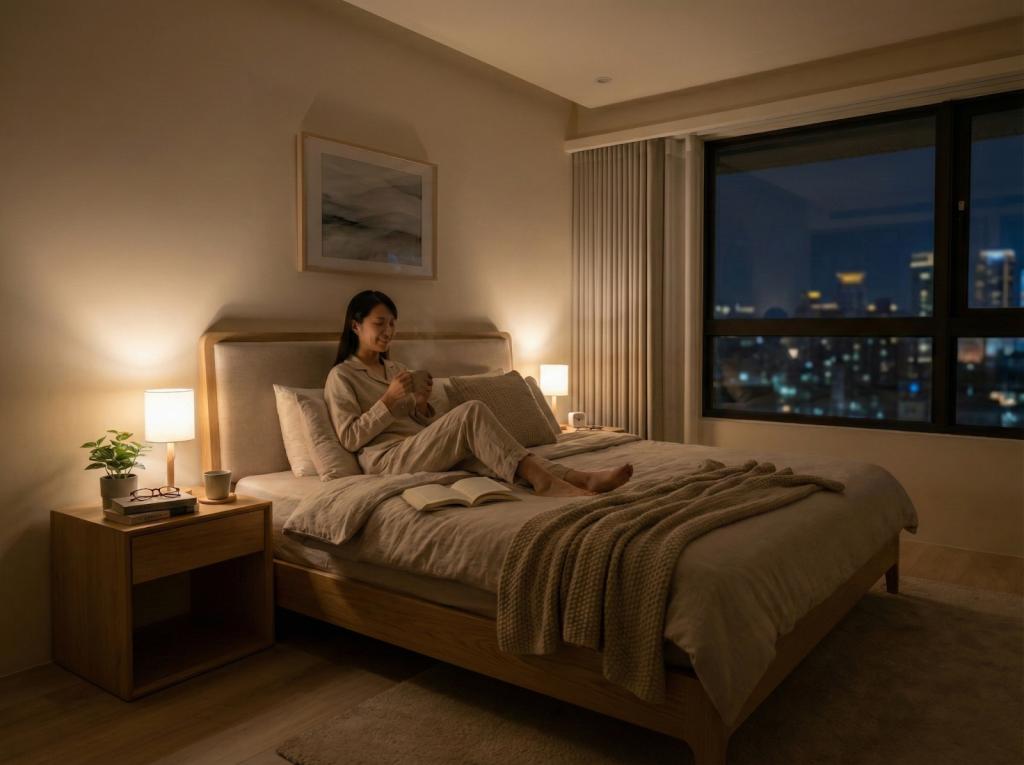
At nine fifty, I get into bed with a physical book. I read for about thirty minutes. Fiction usually. Something absorbing but not too exciting.
Around ten twenty, I start getting sleepy. I put the book down, turn off the light, and go to sleep. I use an eye mask if my partner is still up with a light on.
Six fifteen the next morning, my alarm clock rings. I wake up feeling rested.
Some nights are perfect. Some are not. The goal is not perfection. It is consistency. Most nights, this routine works. On the nights it does not, I do not panic. I accept it and try again the next day.