
I found my grandma’s old cedar trunk in her attic three years ago, and it wrecked me a little, in the best way.
We were clearing out her place after she moved into somewhere smaller. Behind a stack of boxes sat this beat up trunk with a rusty latch that took three of us and a butter knife to finally pry open. Inside were folded dresses, a fur stole that had definitely seen better decades, a pair of gloves that still smelled like lavender, and photos of my grandma at twenty, dressed in a way I’d only ever seen in old films.
We spent the whole afternoon trying things on. Laughing at how tiny the waistlines were. Asking my mom question after question about what people actually wore back then, and why. That trunk kind of sent me down a rabbit hole. Old magazines, documentaries, vintage archives online, all of it. I got a little obsessed, honestly.
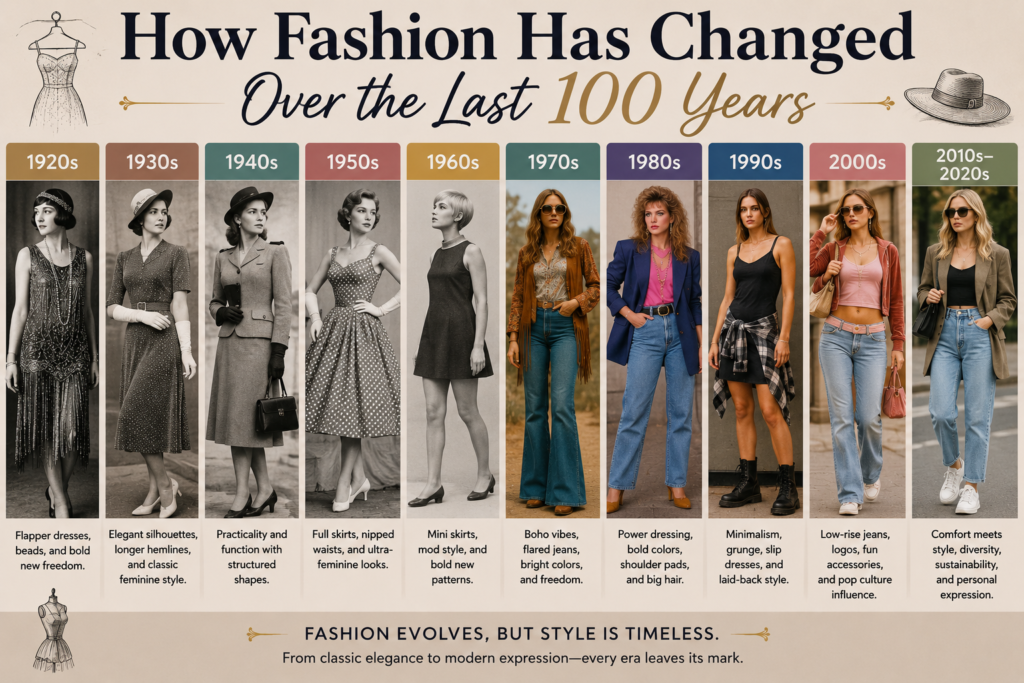
Here’s the thing though. Fashion hasn’t changed over the last hundred years just because people got bored of last season’s look. It shifted because of wars, money troubles, new technology, music scenes, and women fighting for the basic right to wear clothes they could actually move in. So pour some coffee. This is a fun one.
Clothes Used to Be a Much Bigger Deal
Before jumping into the decades, one thing is worth understanding first.
Clothing used to take real time and money. No next day shipping. No app you could scroll at midnight and buy a shirt on impulse. Most garments were sewn by hand, or on basic machines, and fabric wasn’t cheap.
A woman in the 1920s might’ve owned five or six outfits, total. Compare that to closets today that overflow with stuff we forget we even own. That single detail changes how you understand everything else in this article. Every shift in style also mirrored a shift in how people actually lived.
The 1920s: Women Basically Set Their Corsets on Fire
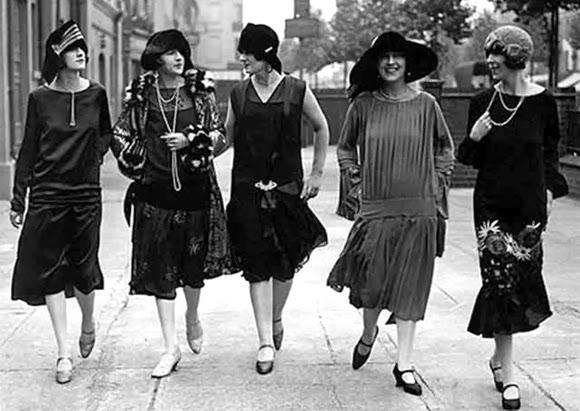
My grandma used to swear her own mother burned her corset in the backyard out of pure frustration. I have no idea if that’s completely true or a little exaggerated for storytelling purposes, but it captures the decade well.
After World War I, women had spent years doing factory work, driving ambulances, taking on physical labor a corset simply couldn’t handle. So it got dropped. Looser, drop waisted dresses took over, and hemlines rose above the ankle for the first time in mainstream fashion, which honestly scandalized a lot of people.
Flapper dresses. Fringe. Beaded everything. Shorter bob haircuts. All of it became a symbol of a new kind of freedom women hadn’t really had access to before.
The 1930s and 1940s: Fashion During Genuinely Hard Times
This part gets a little heavier, but stay with me.
The Great Depression hit in the 1930s, and the carefree flapper look suddenly felt tone deaf. Fashion turned more fitted and modest again, partly because fabric was scarce, partly because the mood of the country had shifted completely. Plenty of women sewed their own clothes at home, and dress patterns became a household staple rather than a hobby.
Then World War II came, and clothing rationing became very real across the US and UK. Fabric got redirected toward uniforms, so civilian clothes used less material overall. This is actually where the classic shoulder pad silhouette started, giving women’s blazers and dresses a structured, almost military edge.
My grandma remembered drawing a line up the back of her legs with eyeliner because real stockings were rationed and nearly impossible to find. People got creative out of necessity. Not because it was trendy, but because they had no other option.
The 1950s: Everyone Suddenly Got Very Polished
Picture poodle skirts, cinched waists, perfectly pressed collars. That’s the 1950s in a nutshell.
Once the war ended, a lot of countries pushed hard toward traditional gender roles, and fashion followed right along. Women’s clothing emphasized a tiny waist, a full skirt, an almost too perfect polish to it. Christian Dior’s New Look collection basically defined the whole decade with its hourglass shape.
Men stayed pretty conservative too. Suits, hats, clean lines everywhere. It’s wild looking back at how formally people dressed just to run errands or grab groceries.
The 1960s: Things Got Loud, Fast
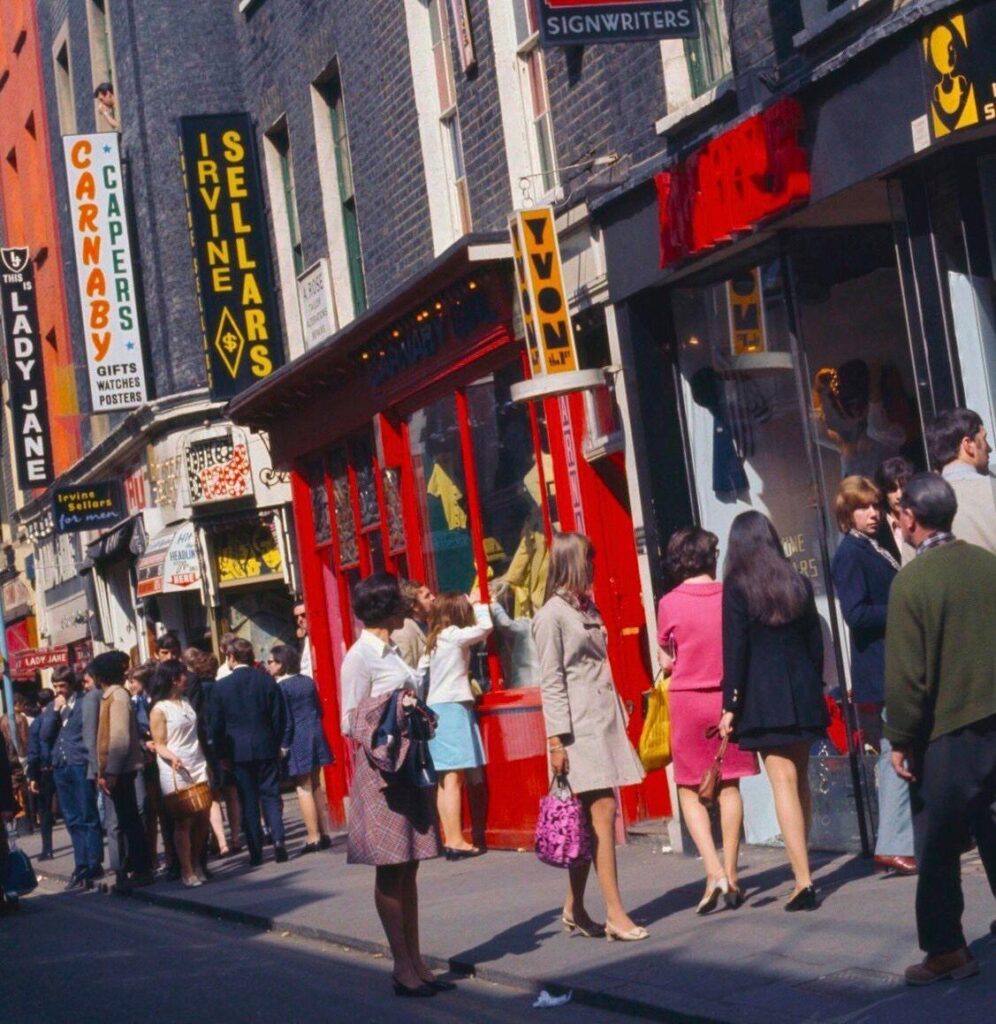
Here’s where fashion history genuinely gets fun.
Early in the decade, that polished Jackie Kennedy look still ruled, pillbox hats and structured coats. But by the mid to late sixties, the counterculture movement exploded, and clothing exploded right along with it.
Miniskirts hit the mainstream thanks to designers like Mary Quant. Psychedelic prints, bell bottoms, bold clashing colors, all of it tied directly to the hippie movement’s rejection of old norms. Fashion stopped being just decoration and started being a form of protest.
This is also roughly when fashion split into distinct subcultures for the first time. Mods, hippies, rockers, each had a completely different uniform, which hadn’t really existed before in quite the same way.
The 1970s: Denim, Disco, and Doing Whatever You Wanted
The seventies took that sixties individuality and cranked the volume even higher.
Bell bottom jeans became a closet staple for basically everyone. Platform shoes made people several inches taller, and probably caused a fair number of twisted ankles along the way. Disco brought sequins, jumpsuits, and shiny fabrics that lit up under club lighting.
At the same time, a completely different bohemian style existed right alongside all that glam, flowing skirts, fringe vests, natural fabrics. Funny how two opposite aesthetics coexisted in the exact same decade without much friction.
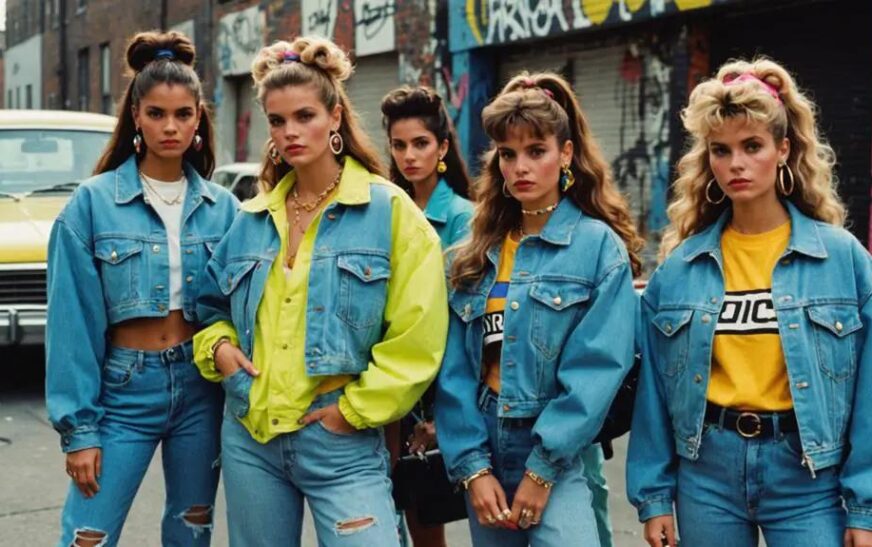
Denim also became a genuine fashion statement here, not just workwear anymore. Levi’s and Wrangler saw huge growth once jeans moved off farms and into everyday closets.
The 1980s: Bigger Meant Better, Apparently
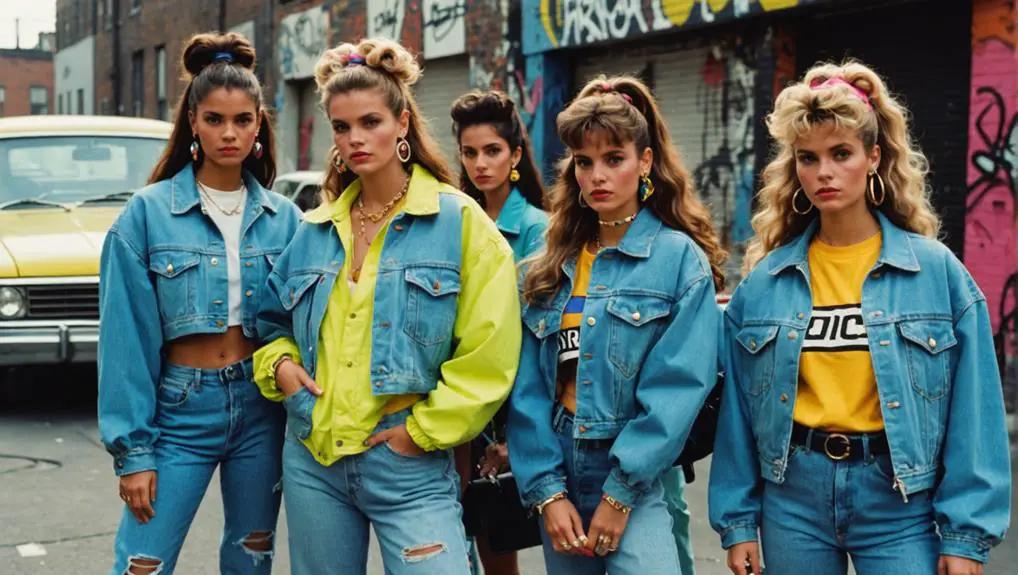
Ask anyone who lived through the eighties and shoulder pads, big hair, or neon will come up within the first ten seconds.
This decade was loud in every sense of the word. Power dressing took over, especially as more women entered corporate offices. Sharp blazers with exaggerated shoulders were meant to project authority in workplaces that were still mostly run by men.
Meanwhile, workout culture exploded because of aerobics videos, and that pushed spandex, leg warmers, and headbands straight into everyday street fashion, not just gym class. MTV launched in 1981 too, and musicians turned into overnight style icons. Madonna, Michael Jackson, Prince. They didn’t just make music people loved, they made outfits people wanted to copy the next morning.
The 1990s: Grunge, Minimalism, and Hip Hop Everywhere
The nineties felt like a direct reaction against how flashy the eighties had gotten.
Grunge came out of Seattle’s music scene, popularized by bands like Nirvana. Flannel shirts, ripped jeans, combat boots, a whole “I don’t care” attitude turned into an aesthetic of its own. At the same time, high fashion went minimalist, with designers like Calvin Klein pushing simple slip dresses and clean lines.
Hip hop culture had a massive influence too. Baggy jeans, oversized jackets, sneaker culture, all of it went mainstream instead of staying niche. My cousin once showed me her high school yearbook, and the sheer amount of flannel and chunky boots in every single photo was honestly hilarious.
The 2000s: A Chaotic Mashup of Everything
Looking back at 2000s fashion feels like watching three decades collide at once.
Low rise jeans, velour tracksuits, chunky highlights, rhinestones on absolutely everything. Reality TV and celebrity culture exploded, with magazines constantly documenting what celebrities wore, which sped up trend cycles more than ever before.
Fast fashion really took off around here too. Forever 21, H&M, Zara made it possible to buy trendy clothes cheap and almost instantly, which completely changed how often people bought new stuff.
A mistake I made during this era, and I’m guessing I wasn’t alone, was buying clothes purely because they were cheap and trendy, not because they fit well or held up. I owned a whole drawer of shirts from this period that fell apart after three washes, tops.
The 2010s: Social Media Basically Took Over Fashion
This is the decade Instagram turned into a fashion magazine everyone carried around in their pocket.
Athleisure exploded. Leggings and sneakers became acceptable for almost any occasion, not just the gym. Influencers started shaping trends faster than traditional magazines ever managed. Brands like Lululemon and Nike benefited enormously from that shift toward comfort first everyday wear.
Thrifting and vintage shopping also came back in a big way, partly as a budget move, partly as pushback against fast fashion’s environmental damage. Apps like Depop and Poshmark made buying and selling secondhand clothes incredibly easy for anyone with a phone.
The 2020s: Comfort, Nostalgia, and a Little Bit of Guilt
Right now fashion feels caught in a few contradictions at once.
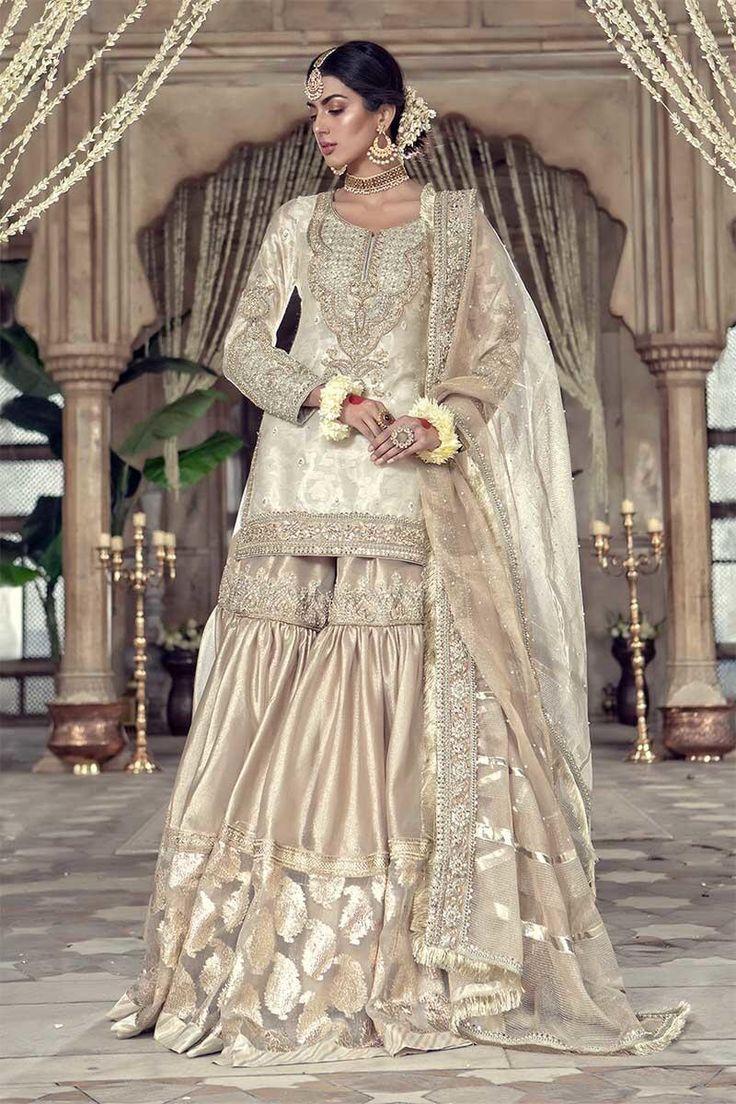
The pandemic pushed comfort focused clothing even further. Loungewear, oversized sweaters, soft fabrics became staples once everyone started working from home. At the same time, there’s a huge nostalgia wave happening, Y2K fashion, nineties baggy jeans, early 2000s trends, all making a comeback among people who didn’t even live through the originals.
Sustainability has become a much louder conversation too. More people are asking where their clothes actually come from, how they’re made, whether buying secondhand makes more sense than constantly restocking fast fashion. Platforms like ThredUp, Vinted, and even Facebook Marketplace have made secondhand shopping normal rather than something only budget shoppers bothered with.
How to Recreate a Vintage Look Without Looking Like You’re in Costume
If vintage fashion interests you the way it interests me, here’s a rough approach that’s worked after plenty of trial and error on my part.
Pick one decade. Not five. Mixing too many eras at once tends to look confusing instead of intentional.
Choose one statement piece. A high waisted skirt, a specific blazer silhouette, one distinct shoe style, works better than trying to nail a full head to toe outfit from scratch.
Modernize everything else around it. Pair that one vintage piece with something simple and current, a plain tee, modern sneakers, so the whole look doesn’t read as a costume.
Shop secondhand first. Thrift stores, Depop, estate sales often have genuinely original pieces, and buying secondhand is usually cheaper and kinder to the planet than buying new “vintage inspired” fast fashion.
Get things altered if needed. A lot of older clothing runs smaller or has different proportions than modern sizing expects. A local tailor can fix that for surprisingly little money.
Mistakes People Tend to Make With Vintage Fashion
I’ve made basically every one of these myself, so take this as a friendly heads up.
Buying a whole outfit from one era without adjusting for modern proportions or comfort. Assuming vintage automatically means better quality, when honestly some older pieces used less durable dyes and fabrics than people assume. Skipping care instructions on delicate fabric, which can ruin an irreplaceable piece in a single wash. Chasing every nostalgic trend just because it’s popular online, instead of picking pieces that actually suit your own style and daily life.
Why Any of This Actually Matters
Understanding fashion history isn’t just useful trivia for costume parties.
Once you understand why certain trends existed, patterns start jumping out at you. Comfort and restriction seem to trade places every couple decades. Economic hardship tends to simplify fashion. Prosperity tends to make it flashier. Technology, sewing machines back then, social media now, keeps speeding up how fast trends spread and then die out.
That awareness makes it a lot easier to shop with intention instead of impulse. Instead of chasing whatever’s trending on TikTok this week, you can actually ask whether something fits your life, your body, and what you care about around spending and sustainability.
A Final Thought From Someone Who Fell Down This Rabbit Hole
That trunk in my grandma’s attic taught me way more than I expected going in.
Fashion isn’t just fabric and stitching. It’s a visual diary of what people were living through, what they valued, what freedoms they were fighting for or finally celebrating at that exact moment.
My grandma passed a couple years after we found that trunk. I still have the dress she wore at twenty hanging in my closet. I don’t wear it, it’s far too delicate now, but I look at it sometimes and think about how much has changed in a hundred years, and honestly, how much has stayed exactly the same. People have always wanted to feel comfortable, confident, and like themselves in whatever they’re wearing. Only the shape of that desire keeps shifting with the times.
If you’ve got old photos or clothes tucked away somewhere in your own family, go dig them out. You might learn more from one faded photograph than from any fashion documentary out there.